On this page
- What Are Tiles, and Why Does the Type of Tile Matter?
- Types of Tiles at a Glance: How Do They Compare?
- What Is the Difference Between Ceramic, Porcelain and Vitrified Tiles?
- Which Natural Stone Tiles Can You Choose From?
- What Are Terracotta, Cement and Quarry Tiles?
- Which Types of Tiles Work Best for Walls?
- Which Types of Tiles Suit Each Room, Floor and Roof?
- Which Tile Finishes and Looks Can You Buy?
- Which Tile Sizes Are Popular in India?
- How Do You Choose the Right Type of Tile?
- How Are Different Types of Tiles Installed and Maintained?
- The main types of tiles are ceramic, vitrified/porcelain, natural stone, terracotta, cement, mosaic and glass.
- Water absorption separates the types better than the label: lower means denser and better for wet floors.
- Vitrified tiles suit most Indian floors; ceramic suits walls and light-traffic floors.
- Stone, terracotta and cement tiles look rich but need sealing and gentle cleaners.
- Finish is separate from material: matte is not automatically anti-skid.
- Buy every box from one batch, plus 5–15% extra for cuts and breakage.
The types of tiles used in Indian homes are ceramic, vitrified (porcelain), natural stone, terracotta, cement, mosaic and glass. Each type differs in density, grip, upkeep and cost.
A glossy wall tile on a bathroom floor turns slippery. A soft marble in a busy hall scratches and stains. This guide sorts tiles by material, by where they go and by finish, so you can avoid both mistakes.
What Are Tiles, and Why Does the Type of Tile Matter?
A tile is a thin, flat slab of fired clay, stone, cement or glass used to cover floors, walls and roofs. Two tiles can look the same and still behave very differently.
The difference comes from how the tile is made. Clay mix, firing heat and pressing force decide how much water a tile soaks up and how hard its surface is.
The wrong type shows up in four ways:
- Slips: glossy tiles on wet bathroom or balcony floors.
- Stains: porous stone or terracotta left unsealed in a kitchen.
- Cracks and chips: thin wall tiles used on busy floors.
- Cost: premium stone where a vitrified tile would do the job.
Types of Tiles at a Glance: How Do They Compare?
The table below compares the different types of tiles by water absorption, best use, upkeep and relative cost. Cost bands are relative, not rupee prices, because rates change by brand and size.
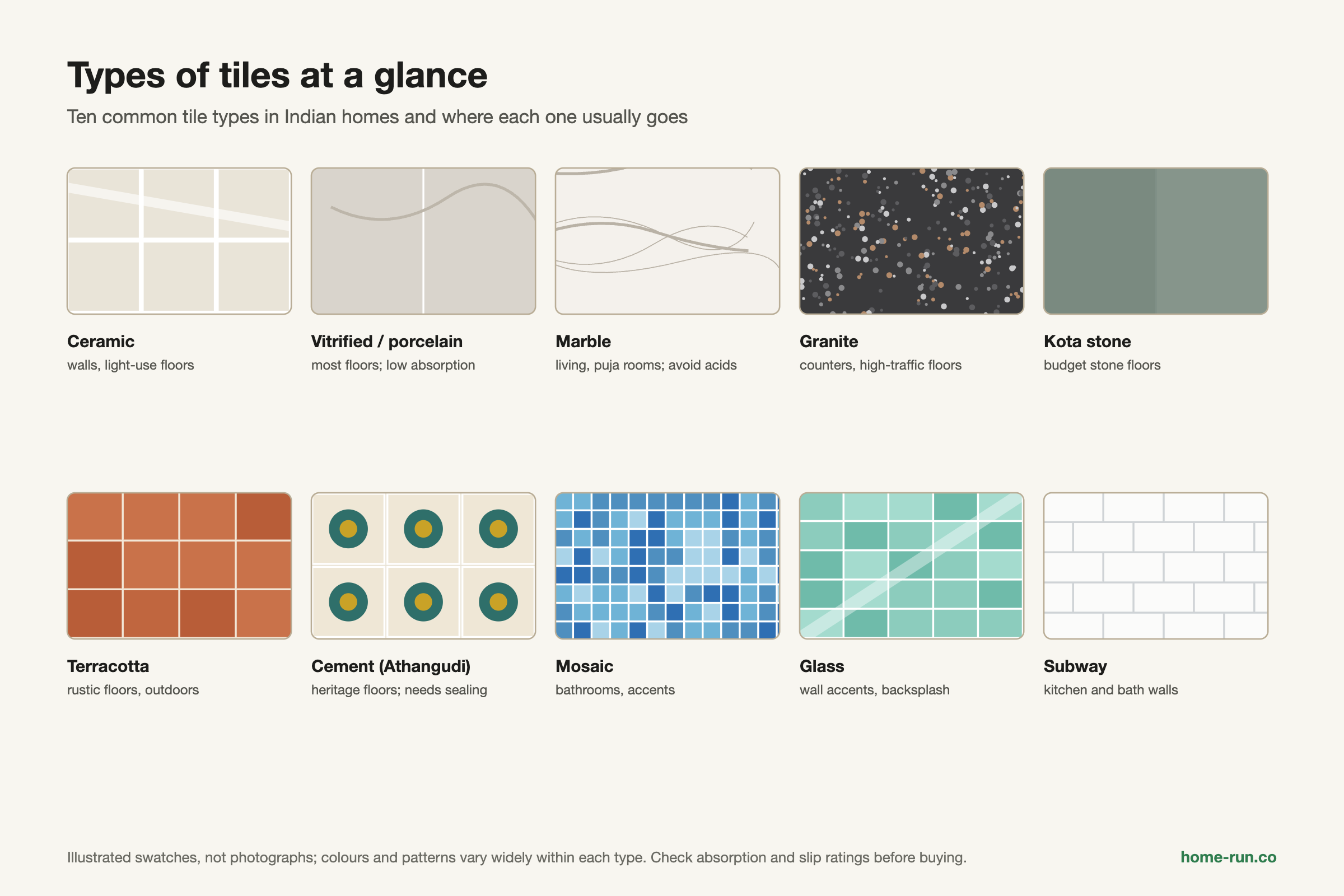
Main types of tiles compared
Low = less water soaked up| Tile type | Water absorption | Best for | Upkeep | Cost band |
|---|---|---|---|---|
| Ceramic Budget | Medium to high | Walls, light-traffic floors | Low | Low |
| Vitrified / porcelain Default pick | Very low | Most floors, wet areas | Low | Low to medium |
| Marble | Low to medium | Living rooms, puja rooms | High | Medium to premium |
| Granite | Low | Kitchens, stairs, outdoors | Low to medium | Medium to premium |
| Kota and Kadappa stone | Medium | Utility, balconies, corridors | Medium | Low to medium |
| Terracotta | High | Courtyards, verandas | High (sealing) | Low to medium |
| Cement / Athangudi | Medium | Heritage-style floors | Medium to high | Medium |
| Mosaic and glass Accents | Very low (glass) | Splashbacks, shower walls | Medium (grout) | Medium to premium |
Floors take vitrified or stone. Walls take ceramic, glass or mosaic. Wet floors need a matte, anti-skid surface whatever the material.
What Is the Difference Between Ceramic, Porcelain and Vitrified Tiles?
Ceramic, porcelain and vitrified tiles differ mainly in water absorption. Ceramic soaks up the most water. Porcelain and vitrified tiles are dense and soak up very little.
IS 15622:2017, the Bureau of Indian Standards (BIS) specification for pressed ceramic tiles, sorts tiles into five groups by water absorption. The groups match ISO 13006, the international tile standard.
Water absorption groups for pressed tiles
% of tile weight| Group | Water absorption | Usually sold as |
|---|---|---|
| BIa | 0.5% or less | Vitrified, porcelain |
| BIb | 0.5–3% | Vitrified, semi-vitrified |
| BIIa | 3–6% | Semi-vitrified, ceramic floor |
| BIIb | 6–10% | Ceramic floor and wall |
| BIII | Above 10% | Ceramic wall |
Ceramic tiles
Ceramic tiles are clay tiles pressed and fired at lower heat, usually with a printed, glazed face. They are light, cheap and easy to cut, which makes them the standard choice for kitchen and bathroom walls. Our guide to ceramic tiles covers grades and costs.
Porcelain tiles
Porcelain tiles are made from finer clay fired at higher heat, so the body is dense and hard. They resist water, stains and wear, and suit floors, wet areas and outdoor spaces. Read more in our guide to porcelain tiles.
Vitrified tiles and their sub-types
Vitrified tiles are clay tiles mixed with silica and feldspar and fired until the body turns glass-like. In India, "vitrified" is the usual trade name for low-absorption, porcelain-type floor tiles. The sub-types differ in where the colour sits:
- Soluble salt: colour soaks only a few millimetres into a polished surface; it can dull with wear.
- Double charge: a thick, coloured top layer is pressed onto the body; suits heavy traffic.
- Full body: colour runs through the whole tile, so chips barely show.
- GVT (glazed vitrified tile): a printed design under a glaze; gives wood, stone or marble looks.
- PGVT (polished glazed vitrified tile): a GVT with a high-gloss polished face.
Porcelain and vitrified describe the same idea: a dense, low-absorption body. Brands use the names differently, so compare the absorption group, not the label.
Ceramic tile
WallsLighter body, higher absorption.
- Cheaper per square foot
- Easy to cut and drill
- Best on walls and light-traffic floors
- Chips show the clay body underneath
Vitrified tile
FloorsDense body, very low absorption.
- Stronger and more wear-resistant
- Suits wet and busy floors
- Comes in large formats
- Needs polymer-modified adhesive
Which Natural Stone Tiles Can You Choose From?
Natural stone tiles are cut from quarried rock, so every piece has its own pattern. The common types of stone tiles in India are marble, granite, Kota, Kadappa, slate and terrazzo.
Marble tiles
Marble is a soft, veined stone with a classic polished look. It suits living rooms and puja rooms. Acids such as lemon, vinegar and many bathroom cleaners etch it, and spills can stain it unless it is sealed. Indian marble is quarried locally; Italian marble is imported and costs more.
Granite tiles
Granite is a hard, dense stone that resists scratches and heat. It suits kitchen floors, staircases, entrances and outdoor areas. A polished granite is slippery when wet, so pick a flamed or leather finish outside.
Kota and Kadappa stone
Kota stone is a limestone from the Kota region of Rajasthan, usually green-grey or brown. Kadappa (Cuddapah) is a black limestone from Kadapa district in Andhra Pradesh. Both are low-cost, hard-wearing choices for utility areas, balconies and corridors.
Slate, travertine and limestone
Slate is a layered stone with a natural grip, good for outdoor and garden paths. Travertine and other limestones give a soft, warm look but are porous and need sealing.
Terrazzo tiles
Terrazzo is stone chips set in cement or resin, then ground and polished. It comes as factory tiles or as a floor cast on site. The site-cast version is the classic Indian mosaic flooring.
Marble, Kota, Kadappa and travertine are calcium-based stones. Acidic cleaners etch them and leave dull patches. Use a pH-neutral cleaner only.
What Are Terracotta, Cement and Quarry Tiles?
Terracotta, cement and quarry tiles are rustic and heritage types of tiles for house floors that want an earthy, handmade look. All three need more care than vitrified tiles.
Terracotta tiles
Terracotta tiles are unglazed fired clay in red and orange tones. They feel cool underfoot and suit verandas, courtyards and traditional homes. They are porous, so seal them before use and reseal as the maker advises.
Cement and Athangudi tiles
Cement tiles are made from cement, sand and pigment and are cured, not fired. Athangudi tiles are handmade cement tiles from Athangudi village in the Chettinad region of Tamil Nadu. They are made from cement, river sand and iron oxide colours. Small colour variations between pieces are normal and part of the charm.
Quarry tiles
Quarry tiles are hard, unglazed, extruded clay tiles. Their matt surface gives grip, which suits utility areas, service kitchens and outdoor steps.
Terracotta and cement tiles can absorb grout colour. Ask your fitter to apply a sealer before grouting, then again after cleaning.
Which Types of Tiles Work Best for Walls?
The best types of tiles for walls are ceramic, glass, mosaic and subway tiles. Wall tiles carry no foot traffic, so they can be thinner and lighter than floor tiles.
- Ceramic wall tiles: the low-cost default for bathroom and kitchen walls.
- Mosaic tiles: small pieces on a mesh sheet, used for feature strips, niches and shower walls.
- Glass tiles: reflective and stain-proof, good for kitchen splashbacks and feature walls.
- Subway (metro) tiles: small rectangles laid in a brick pattern; popular on backsplashes.
- Sintered stone and large slabs: engineered, thin, very dense panels for feature walls and counters at a premium price.
Small tiles mean more grout lines and more cleaning. Use them where you want grip or detail, and large tiles where you want easy mopping.
Which Types of Tiles Suit Each Room, Floor and Roof?
Choose tiles by where they go. Floors need strength and grip, walls need moisture resistance and easy cleaning, and roofs need weather resistance.
Types of tiles by room
Floor and wall picks| Area | Floor tile | Wall tile | Why |
|---|---|---|---|
| Living and dining | Vitrified (GVT, PGVT, double charge), marble | Feature wall only | Wear resistance, large formats |
| Bedroom | Vitrified, wood-look tiles | Rarely tiled | Warm look, low upkeep |
| Kitchen | Matte vitrified, granite | Ceramic, glass, subway | Oil and stain resistance |
| Bathroom | Anti-skid vitrified or porcelain | Ceramic, mosaic | Grip when wet, low absorption |
| Balcony and terrace | Anti-skid porcelain, Kota, terracotta | Outdoor-rated tiles | Rain, sun and grip |
| Driveway and garden | Granite, slate, parking tiles | Not needed | Vehicle load, grip |
Roof and ceiling tiles
Roof tiles are a separate family from floor and wall tiles. The best-known Indian type is the Mangalore tile, a red clay roof tile first made by the Basel Mission in Mangaluru, Karnataka, in 1865. Other roof options include concrete roof tiles and heat-reflective cool roof tiles for flat terraces.
Ceiling tiles are light boards, usually gypsum or mineral fibre, set in a false ceiling grid. They are not fired tiles at all.
Which Tile Finishes and Looks Can You Buy?
A tile finish is the surface texture, from shiny to rough. Finish is separate from material: the same vitrified tile can come glossy, matte or textured.
- Glossy: shiny and easy to wipe, but shows scratches and turns slippery when wet.
- Polished: a ground and buffed shine, common on PGVT and marble; same slip risk as glossy.
- Satin: a soft sheen between glossy and matte; hides marks well.
- Matte: low glare and hides dust, but rough matte faces trap dirt.
- Textured or rustic: raised or stone-like surface with good grip; harder to clean.
- Anti-skid: a textured face made for wet floors in bathrooms, balconies and ramps.
Look-alike tiles are printed GVT or porcelain. Wood-look planks, marble-look slabs and concrete-look tiles give the style without the upkeep of real wood or stone. Digital printing lets brands copy almost any surface.
A smooth matte tile can still be slippery when wet. For bathrooms and balconies, ask for a slip rating on the datasheet. European R-ratings (R9 to R13) are a loose guide; higher means more grip.
Which Tile Sizes Are Popular in India?
The most common floor tile sizes in India are 600 × 600 mm and 600 × 1200 mm. Wall tiles are usually 300 × 450 mm or 300 × 600 mm.
Common tile sizes and where they suit
Sizes in mm| Size (mm) | Floor or wall | Suits |
|---|---|---|
| 300 × 300 | Floor | Bathrooms, balconies |
| 300 × 450 | Wall | Bathroom and kitchen walls |
| 300 × 600 | Floor and wall | Bathrooms, kitchen walls, stairs |
| 600 × 600 | Floor | Living rooms, bedrooms, kitchens |
| 600 × 1200 | Floor | Living and dining areas |
| 800 × 800 and larger | Floor | Large halls, premium homes |
Larger tiles mean fewer grout lines and make a room look bigger, but they waste more in small rooms. Light colours suit small rooms. Darker shades work for feature walls and large halls.
How Do You Choose the Right Type of Tile?
Choose the right type of tile by matching it to the room, foot traffic, moisture, slip risk, budget and the upkeep you can manage. Then check quality before you pay.
- Room and traffic: vitrified or granite for busy floors; ceramic for walls.
- Moisture: BIa or BIb tiles for bathrooms, balconies and outdoors.
- Slip risk: anti-skid finish on every wet floor.
- Upkeep: pick stone, terracotta or cement only if you will seal and clean them gently.
- Budget: compare installed cost per square foot, not just the tile price.
How many tiles do you need?
Box contents vary by brand and size, so check the coverage printed on the box before you divide.
What should you check on delivery?
- The same batch or lot number on every box
- The same shade and calibre (size) code on every box
- Water absorption group and IS 15622 or ISI mark on the box
- No broken tiles; count them before the delivery person leaves
- A few spare tiles kept for future repairs
Signs of a defective or low-grade tile
- Warped tiles that rock when laid face down on a flat floor
- Uneven or chipped edges
- Pinholes, crazing (fine cracks) or bare patches in the glaze
- Visible shade difference between boxes under daylight
- No brand, batch or standard marked on the box
Picked your tile type?
Order tiles, adhesive and grout with a GST invoice and delivery across Bengaluru.
How Are Different Types of Tiles Installed and Maintained?
All tiles need a flat, clean, cured base and the right adhesive. Stone, terracotta and cement tiles also need sealing.
- Prepare the surface: level and clean the screed or wall, and fix any damp first.
- Pick the adhesive: dense vitrified and porcelain tiles bond poorly to plain cement mortar, so use a polymer-modified tile adhesive. IS 15477, the Indian standard for tile adhesives, sets the types; follow the adhesive maker's datasheet for each tile.
- Lay with spacers: keep even joints and check level as you go.
- Grout after the adhesive sets: use cement grout for walls and epoxy grout for wet floors and kitchens.
- Seal porous tiles: marble, Kota, terracotta and cement tiles need a sealer.
- Keep off until cured: follow the adhesive and grout makers' cure times before foot traffic.
Clean vitrified and ceramic tiles with mild detergent and water. Clean marble, Kota and Kadappa with a pH-neutral cleaner only. Scrub grout lines in bathrooms every few weeks.