On this page
- What Is Synthetic Enamel Paint and What Is It Used For?
- What Are the Advantages and Disadvantages of Enamel Paint?
- How Is Synthetic Enamel Different From Acrylic Enamel and Emulsion?
- Can You Use Synthetic Enamel Paint on Metal and Wood?
- How Do You Choose the Right Enamel Finish and Shade?
- How to Apply Synthetic Enamel Paint Step by Step
- What Are the Common Problems With Enamel Paint and How Do You Fix Them?
- How Do You Clean and Maintain Enamel Surfaces Safely?
- Synthetic enamel paint is the "oil paint" most Indian painters use on doors, grilles and gates.
- It suits wood and metal. Use emulsion, not enamel, for large walls and ceilings.
- Always prime first: red oxide or metal primer on iron and steel, wood primer on timber.
- Plan two coats, with at least 6–8 hours between them, and keep the area ventilated.
- White enamel can turn yellow indoors over time; water-based enamel yellows less.
Synthetic enamel paint is a solvent-based paint made with alkyd resin that dries to a hard, glossy film. You use it on wooden doors, windows, furniture, iron gates, grilles and railings, where a wall paint would scratch or let rust through.
What Is Synthetic Enamel Paint and What Is It Used For?
Synthetic enamel paint is pigment bound in alkyd resin and thinned with a petroleum solvent. Alkyd resin is a factory-made, oil-modified binder. It forms the tough film once the solvent evaporates and the resin reacts with air.
"Enamel" here only means a hard, glossy finish. It has nothing to do with fired glass enamel on cookware.
Indian shops often call it "oil paint". Traditional oil paint used linseed oil as its binder. Synthetic enamel replaced it because it dries faster and holds its gloss longer.
- Wood: main doors, window shutters, frames, cupboards and furniture.
- Metal: gates, window grilles, railings, staircase balusters and pipes.
- Primed masonry: small areas such as dados and skirting, where scrubbing is frequent.
Large interior walls need a breathable wall paint. Enamel traps moisture, smells strongly and shows every wall flaw. Pick an emulsion or distemper paint for walls instead.
What Are the Advantages and Disadvantages of Enamel Paint?
Synthetic enamel paint gives hard, washable protection to wood and metal. The trade-offs are smell, slower drying and yellowing of light shades.
Synthetic enamel: strengths and drawbacks
Weigh both before you buy| Property | What to expect |
|---|---|
| Gloss and hardness Strength | Smooth, shiny film that resists knocks and scrubbing |
| Rust and moisture Strength | Seals primed iron and wood against rain and humidity |
| Colour range Strength | Wide shade cards from every major Indian brand |
| Smell Drawback | Strong solvent odour; higher VOC (volatile organic compounds) than water-based paint |
| Drying Drawback | Surface dry in 2–3 hours, but recoat only after 6–8 hours |
| Yellowing Drawback | Whites and pale shades can yellow indoors |
| Clean-up Drawback | Needs thinner for brushes and spills; water does not work |
How Is Synthetic Enamel Different From Acrylic Enamel and Emulsion?
Synthetic enamel is solvent-based and made for wood and metal. Acrylic (water-based) enamel does the same job with less smell. Emulsion is a water-based wall paint.
Synthetic enamel vs acrylic enamel vs emulsion
Pick by surface first| Feature | Synthetic enamel | Acrylic enamel | Emulsion |
|---|---|---|---|
| Base | Solvent (alkyd resin) | Water | Water |
| Best surfaces | Wood, metal | Wood, metal, indoors | Walls, ceilings |
| Smell | Strong | Mild | Mild |
| Thin and clean with | Mineral turpentine | Water | Water |
| Yellowing | Possible in whites | Low | Low |
Walls get emulsion. Wood and metal get enamel. For kitchen cabinets or heavy-wear furniture, a PU (polyurethane) enamel is tougher still, but Berger's Luxol PU data sheet asks for 24 hours between coats.
Can You Use Synthetic Enamel Paint on Metal and Wood?
Yes. Synthetic enamel paint is the standard finish for both metal and wood in Indian homes. The difference lies in the preparation and the primer.
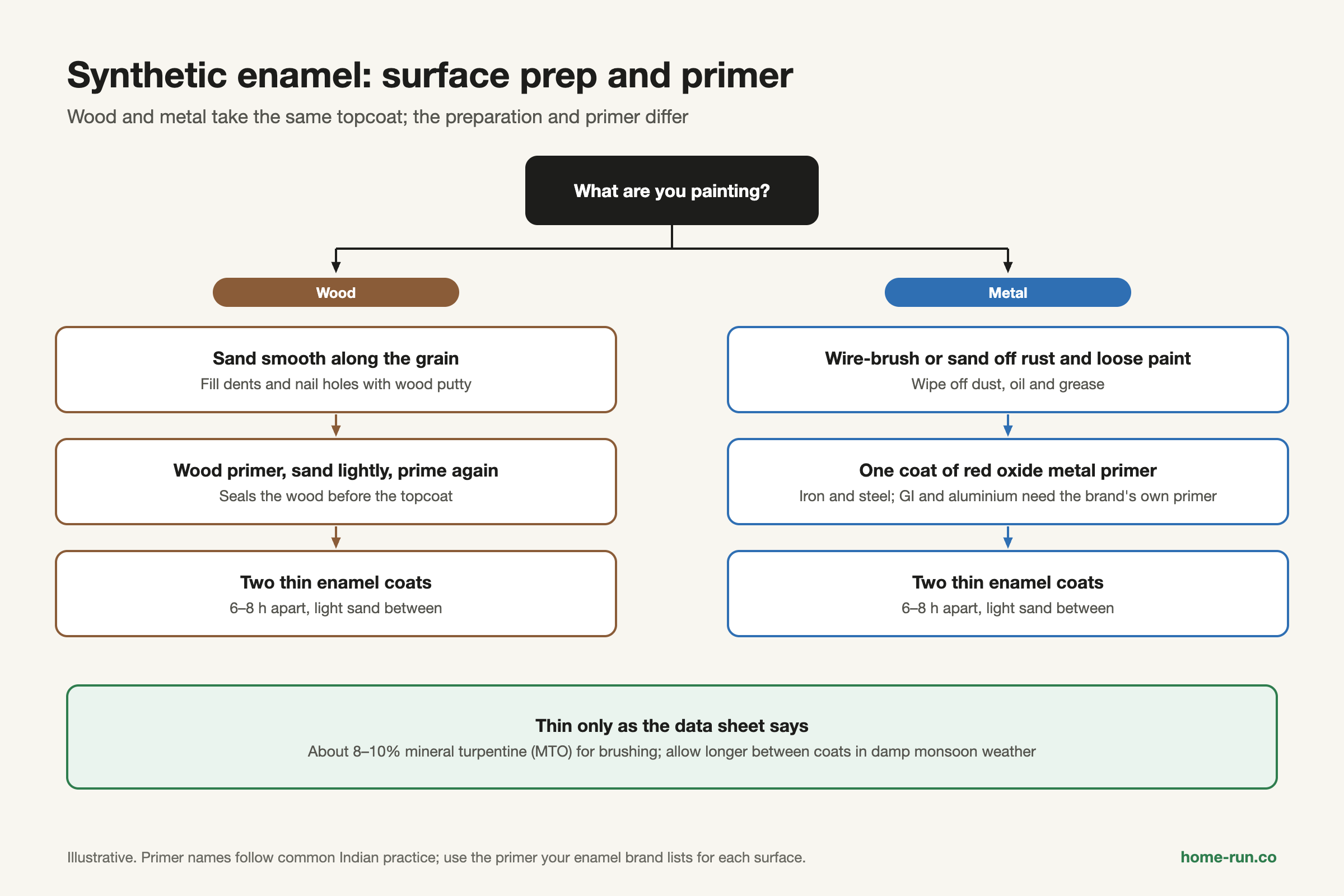
Iron and steel
Rust firstGates, grilles, railings, pipes.
- Wire-brush or sand off all rust and loose paint
- Wipe off dust, oil and grease
- Apply one coat of red oxide metal primer
- Finish with two coats of enamel
Wood
Seal firstDoors, windows, frames, furniture.
- Sand smooth along the grain
- Fill dents and nail holes with wood putty
- Apply wood primer, sand lightly, prime again
- Finish with two coats of enamel
Enamel peels off shiny galvanised (GI) sheet and aluminium. Use the primer the brand lists for these metals, such as a wash primer or a yellow metal primer.
How Do You Choose the Right Enamel Finish and Shade?
Choose synthetic enamel by finish, shade and data-sheet figures, not by price alone.
- Finish: high gloss for grilles and gates; satin or matt for a softer look on furniture. Gloss shows surface flaws more.
- Shade: pick from the brand's shade card. Dark shades hide wear; whites need a non-yellowing option indoors.
- Coverage and drying: compare the label figures for coverage per litre and recoat time.
- Standard: look for the BIS mark. IS 2932 now covers air-drying enamel paint for architectural and industrial use.
- Pack size: tins run from 50 ml to 20 litres. Buy one batch for one job to avoid shade differences.
Painting a gate, grille or door?
Enamel, primer and thinner delivered across Bengaluru.
How to Apply Synthetic Enamel Paint Step by Step
Apply synthetic enamel paint over a clean, primed, dry surface in two thin coats. Preparation decides how long the finish lasts.
- Scrape off loose paint and rust. Sand the surface smooth.
- Wipe away dust and degrease metal with a thinner-damp cloth.
- Apply the correct primer and let it dry as the tin says.
- Stir the enamel well. Thin it only as the data sheet says. Asian Paints lists about 8–10% mineral turpentine oil (MTO) for brushing.
- Brush the first coat in long, even strokes along the grain or the bar.
- Wait at least 6–8 hours, then sand very lightly with fine paper.
- Apply the second coat and keep dust, rain and hands off it.
First coat
Apply over dry primer in a ventilated space.
Surface dry
Dust no longer sticks, but the film is still soft. Do not touch.
Recoat window opens
Asian Paints quotes 6–8 hours; Nerolac asks for at least 8 hours.
Fully hard
Avoid heavy use. IS 2932:2025 allows 96 hours of air drying before hardness tests.
These times assume about 25–27°C and 50–60% relative humidity. Bengaluru's monsoon months are damper, so allow longer between coats. Read our home painting tips for planning the rest of the job.
What Are the Common Problems With Enamel Paint and How Do You Fix Them?
Most enamel paint failures come from poor preparation, thick coats or painting in damp weather.
- Peeling: paint over rust, grease or bare GI. Scrape back, clean and re-prime.
- Tacky, slow drying: high humidity or over-thick coats. Wait for a dry day and apply less paint per coat.
- Wrinkling: recoated too early. Let it harden, sand flat and recoat.
- Brush marks: paint too thick or overworked. Thin as the tin says and brush in one direction.
- Rust bleeding through: rust left under the primer. Remove it fully on the next repaint.
- Yellowing whites: normal for alkyd enamel indoors, away from daylight. Use a water-based enamel for white interiors.
Grilles in window openings face sun and rain on one side. Check our guide to window designs for home when you plan new grilles.
How Do You Clean and Maintain Enamel Surfaces Safely?
Clean enamel-painted surfaces with mild soapy water and a soft cloth. Avoid scouring powder, which dulls the gloss.
Enamel and thinner are flammable. Keep windows open, keep flames and smoking away, and wear gloves and a mask. Spread thinner-soaked rags flat to dry outdoors before you throw them away, and never pour leftover thinner into drains.