On this page
- What Is an Oil Based Primer?
- When Should You Use an Oil Based Primer?
- Oil Based vs Water Based Primer: Which Is Better?
- Which Surfaces Suit Oil Based Primer: Wood, Metal, MDF or Walls?
- How Do You Apply Oil Based Primer Step by Step?
- What Can You Paint Over Oil Based Primer?
- How Do You Use Oil Based Primer Safely?
- How Much Oil Based Primer Do You Need, and What Should You Check?
- Oil based primer uses a resin binder thinned with mineral turpentine.
- Use it on bare wood, iron and steel, and over stains or old enamel.
- It dries slower than water based primer: about 8 to 12 hours before recoat on Indian data sheets.
- Fresh, damp or alkaline plaster usually needs a water based or alkali-resistant wall primer instead.
- Ventilate the room, clean brushes with thinner and dry used rags flat before disposal.
An oil based primer is a solvent-thinned first coat that seals a bare surface and gives the topcoat something firm to grip. Painters in India use oil based primer mainly on wood, iron and steel, where a water based primer can raise the grain, let stains bleed or allow rust to start.
What Is an Oil Based Primer?
An oil based primer is an undercoat whose binder is an alkyd or other synthetic resin, thinned with mineral turpentine (MTO, a petroleum solvent). The binder soaks into the surface, seals it and forms a uniform base.
A primer and a paint do different jobs:
- Primer: bonds to the bare surface, seals pores and evens out absorption.
- Topcoat paint: gives colour, sheen and weather resistance.
Indian tins rarely say "oil based". Look for wood primer, red oxide metal primer or "solvent thinnable" (ST). Asian Paints, Berger and Nerolac sell solvent and water thinnable versions.
Red oxide primer is a rust-inhibiting metal primer coloured by iron oxide. Zinc chromate and zinc phosphate primers are different chemistries.
When Should You Use an Oil Based Primer?
Use an oil based primer when the surface is bare wood, bare iron or steel, stained, or coated with old oil paint. Each case has a clear reason:
- Bare wood and plywood: seals thirsty grain so the enamel dries evenly.
- Tannin-rich timber and knots: stops brown resin from bleeding through a light topcoat.
- Grills, gates and railings: a red oxide primer protects iron and steel from rust.
- Water, smoke and marker stains: a solvent primer blocks marks that water based coats can let through.
- Old enamel or glossy finishes: grips better after a light sanding.
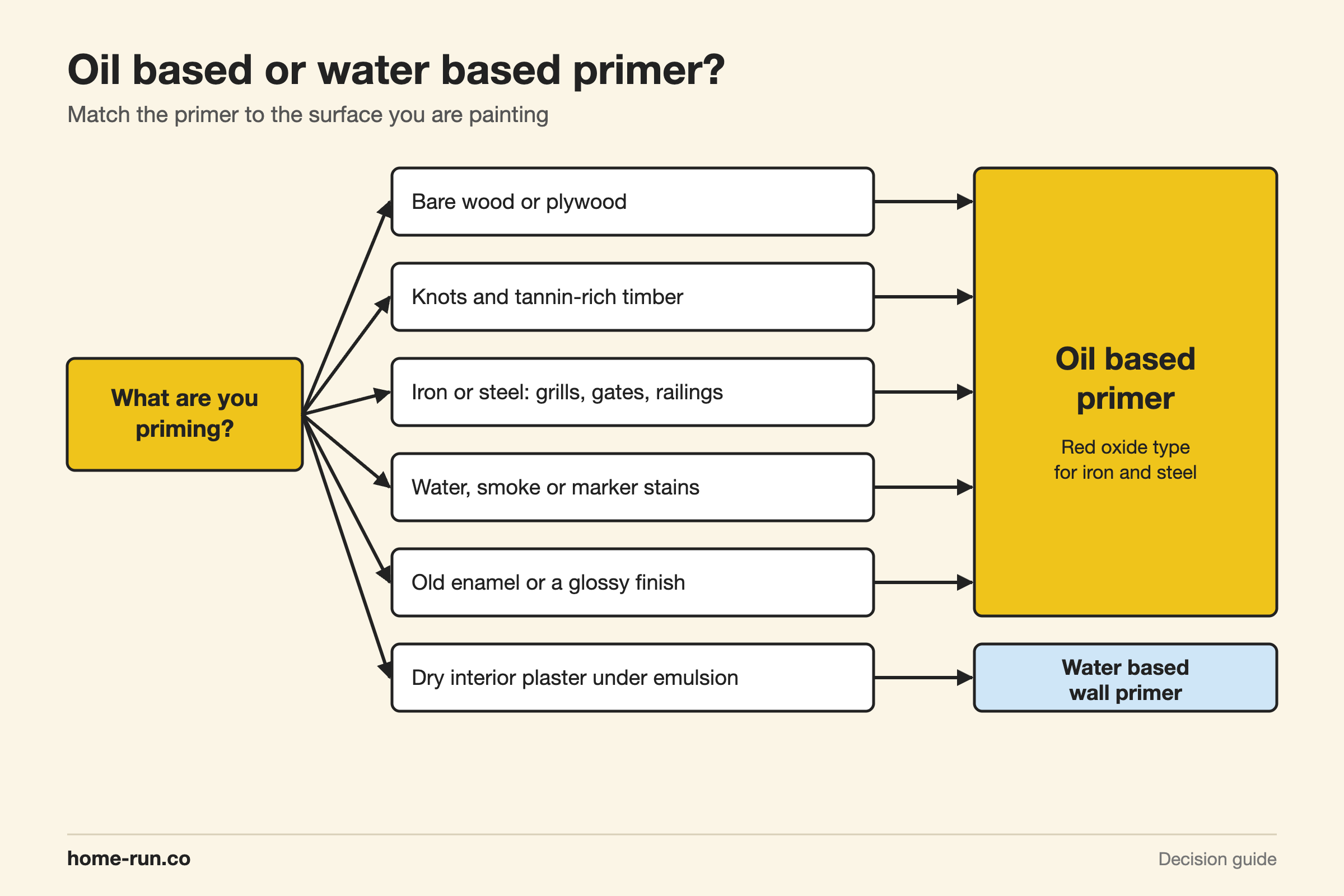
Wood or metal under an enamel finish: oil based primer. Dry interior plaster under emulsion: a water based wall primer is usually simpler and faster.
Oil Based vs Water Based Primer: Which Is Better?
Neither primer wins everywhere: oil based primer is the safer pick for wood and metal, and water based primer is usually enough for dry masonry walls. The figures below come from Asian Paints and Nerolac product data sheets.
Oil based vs water based primer
Check the data sheet of your exact product| Factor | Oil based (solvent) primer | Water based primer |
|---|---|---|
| Thinner | Mineral turpentine, 5–10% on one wood primer | Water |
| Recoat wait | 10–12 h (wood primer); at least 8 h (red oxide) | 4–6 h (interior wall primer) |
| Smell and VOCs | Strong solvent smell; needs ventilation | Mild smell |
| Brush cleanup | Thinner | Soap and water |
| Wood and metal Oil wins | Seals grain, blocks tannin, resists rust | Can raise grain; not for bare iron |
| Dry interior plaster Water wins | Works on cured, dry walls only | Default choice under emulsion |
VOCs (volatile organic compounds) are the solvent vapours behind the smell. Shellac-based primer is a third option for severe stains.
Which Surfaces Suit Oil Based Primer: Wood, Metal, MDF or Walls?
Oil based primer suits wood, MDF and ferrous metal, and plaster only when fully cured and dry.
- Wood and plywood: sand smooth and prime all faces, including hidden edges.
- MDF: cut edges soak up paint fast, so seal them first. Our MDF board guide explains the grades.
- Iron and steel: remove loose rust, then apply a red oxide primer the same day.
- Plaster and concrete: wait 28 days for new plaster to cure. Asian Paints sells a solvent thinnable interior wall primer for dry, cured masonry.
Fresh cement is strongly alkaline, and with moisture it can turn an alkyd film soft and soapy (saponification). The primer then peels. Find the source of damp first with our guide to the causes of wall dampness.
How Do You Apply Oil Based Primer Step by Step?
Apply oil based primer in thin, even coats on a clean, dry, sanded surface.
- Clean: wipe off grease, dirt and loose paint.
- Sand: smooth wood and rough up gloss; wire-brush rust off metal.
- Dust off: wipe with a dry cloth.
- Stir and thin: mix well and thin only as the label says. Use thinned primer within 24 hours.
- Apply: brush along the grain, or roll large flat panels with a solvent-resistant roller.
- Wait and sand: respect the recoat time, then sand lightly before the topcoat.
What Can You Paint Over Oil Based Primer?
Synthetic enamel is the usual topcoat over oil based primer on wood and metal. Read our explainer on synthetic enamel paint for finishes and sheens.
Water based emulsions can go over some solvent primers. Asian Paints lists distemper and emulsions as topcoats for its solvent thinnable wall primer. Wait out the full recoat time and confirm on the topcoat label.
How Do You Use Oil Based Primer Safely?
Use oil based primer in a well-ventilated room, away from flames, with gloves on.
- Solvent vapour is flammable: no gas stove, cigarettes or welding nearby.
- Strong smell in a closed room: open windows and wear a respirator mask.
- Bare hands: wear gloves and clean skin with soap, not thinner.
- Rags balled up in a bin: oily rags can heat up and catch fire. Dry them flat outdoors first.
How Much Oil Based Primer Do You Need, and What Should You Check?
You need the paintable area divided by the coverage per litre, multiplied by the number of coats.
The 130–160 sq ft per litre range is from Asian Paints' solvent thinnable interior wall primer. Check your own tin.
- Primer type matches the surface and the topcoat
- Pack size matches the area: 500 ml, 1 L, 4 L, 10 L or 20 L
- Manufacturing date and sealed lid
- Thinner, recoat time and coverage on the data sheet
- A current quote: prices vary by brand, pack and dealer
Priming doors, grills or walls?
Get primers, thinner and enamels delivered across Bengaluru with a GST invoice.