On this page
- What Is Distemper Paint Made Of?
- What Are the Main Types of Distemper Paint?
- What Are the Benefits of Distemper Paint?
- What Are the Disadvantages of Distemper?
- How Does Distemper Behave in Humid and Monsoon Conditions?
- Distemper vs Emulsion: Which Is Better for Your Home?
- How Much Does Distemper Cost in India, and How Far Does It Go?
- How Do You Apply Distemper Paint Step by Step?
- How Long Does Distemper Last, and How Do You Maintain It?
- Is Distemper Paint the Right Choice for Your Walls?
- Distemper paint is chalk, binder and pigment thinned with water. The binder decides how long it lasts.
- The three types are dry (powder), oil-bound and acrylic distemper. Acrylic is the most common ready-mix today.
- Distemper is cheap and quick, but it is not scrubbable and it flakes on damp walls.
- Two coats of acrylic distemper cover about 80–110 sq ft per kg on smooth, primed plaster.
- Use it on ceilings, bedrooms and rentals. Choose emulsion for kitchens, kids' rooms and busy walls.
Distemper paint is a low-cost, water-thinned wall paint made from chalk (whiting), a binder and pigment. It dries to a soft, chalky matte finish and is used on interior walls and ceilings. This guide covers the distemper paint types, benefits and limits, so you can decide where it suits your home.
What Is Distemper Paint Made Of?
Distemper paint is made of whiting (finely ground chalk), a binder, pigments and water. BIS describes dry distemper in IS 427:2005 as a fine powder of pigments, extenders, water-soluble binders and preservatives.
- Whiting or chalk: calcium carbonate that gives body and the matte white base.
- Binder: the glue that holds the film to the wall. It can be casein, glue, an oil emulsion, PVA or an acrylic polymer.
- Pigments: coloured powders that give the shade.
- Water: the thinner. You never need turpentine for distemper.
Distemper grew out of whitewash, which is only slaked lime and water. Distemper adds a binder and pigment, so it holds colour and rubs off less.
Distemper uses mostly chalk and a small amount of binder. Less binder means a lower price, and also a softer film that marks and wears faster than emulsion.
What Are the Main Types of Distemper Paint?
The main types of distemper paint in India are dry (powder) distemper, oil-bound distemper and acrylic (synthetic) distemper. BIS covers dry distemper in IS 427 and washable distemper in IS 428:2000, which lists two types: oil emulsion and plastic (synthetic polymer emulsion).
Dry distemper (powder, lime or chalk based)
Dry distemper is a powder you mix with water on site. It is the cheapest and least durable type. Use it on ceilings and store rooms.
Oil-bound distemper (OBD)
Oil-bound distemper uses an oil emulsion binder and comes as a paste in tins. It is still thinned with water. OBD gives a smoother finish and handles light wiping better than dry distemper.
Acrylic, synthetic or washable distemper
Acrylic distemper uses an acrylic polymer binder and comes ready-mixed. It has the best adhesion and finish of the three. Examples sold in India include Asian Paints Tractor Acrylic Distemper, Berger Bison Acrylic Distemper and Nerolac Beauty Acrylic Distemper.
Dry vs oil-bound vs acrylic distemper
Relative comparison, no prices| Type | Binder | Finish | Washability | Moisture tolerance | Best use |
|---|---|---|---|---|---|
| Dry distemper Budget | Water-soluble glue or casein | Flat, chalky | None | Poor | Ceilings, store rooms |
| Oil-bound distemper | Oil emulsion | Smooth matte | Light wiping | Low | Bedrooms, rental walls |
| Acrylic distemper Default pick | Acrylic polymer | Even matte | Light wiping | Low to moderate | Living rooms, bedrooms, ceilings |
What Are the Benefits of Distemper Paint?
The main benefits of distemper paint are low cost, easy application and a soft matte finish that hides small plaster flaws.
- Low cost: a 20 kg pack of acrylic distemper costs about ₹1,580, which suits large ceilings and rental flats.
- Easy to apply and touch up: it is brushed or rolled with water as the only thinner.
- Quick drying: brand data sheets list a surface dry time of about 30 minutes.
- Hides flaws: the flat finish does not reflect light, so minor waviness shows less.
- Low odour: it is water-based and non-flammable. For a verified green label, look for certification such as GreenPro, which Berger lists for Bison Acrylic Distemper.
What Are the Disadvantages of Distemper?
The main disadvantages of distemper are poor washability, chalking, flaking on damp walls and a shorter life than emulsion. Each one comes from the weak binder.
- Not scrubbable: wet scrubbing removes the film, and dry distemper rubs off on hands and clothes.
- Chalking and fading: the surface turns powdery and shades lose depth over time.
- Flaking on damp walls: water pushes through the porous film and lifts it off.
- Shorter repaint cycle: plan to repaint sooner than with emulsion.
- Interior only: sun and rain break distemper down quickly on exterior walls.
"Washable" distemper tolerates a soft damp cloth on a small mark. It will not survive a scrub brush. Nerolac advises waiting at least 2 weeks after painting before any wiping.
How Does Distemper Behave in Humid and Monsoon Conditions?
Distemper performs worst on walls that stay damp. Asian Paints says its acrylic distemper should not go on surfaces with continuous seepage or dampness.
- Humid coastal cities: moisture and fungus shorten the life of distemper on outer walls.
- Bengaluru: rain from both the southwest and northeast monsoons can soak external-facing walls and parapets, so check those walls first.
- Bathrooms and kitchens: skip distemper. Steam and splashes cause peeling and stains.
Treat damp, salt bloom (efflorescence) or seepage before painting. Find and fix the water source, let the wall dry, brush off the salts, then use a damp-proof treatment. Our guide on fixing damp patches on walls before painting covers the steps. For active seepage, get a painter or waterproofing specialist to inspect the wall.
Distemper vs Emulsion: Which Is Better for Your Home?
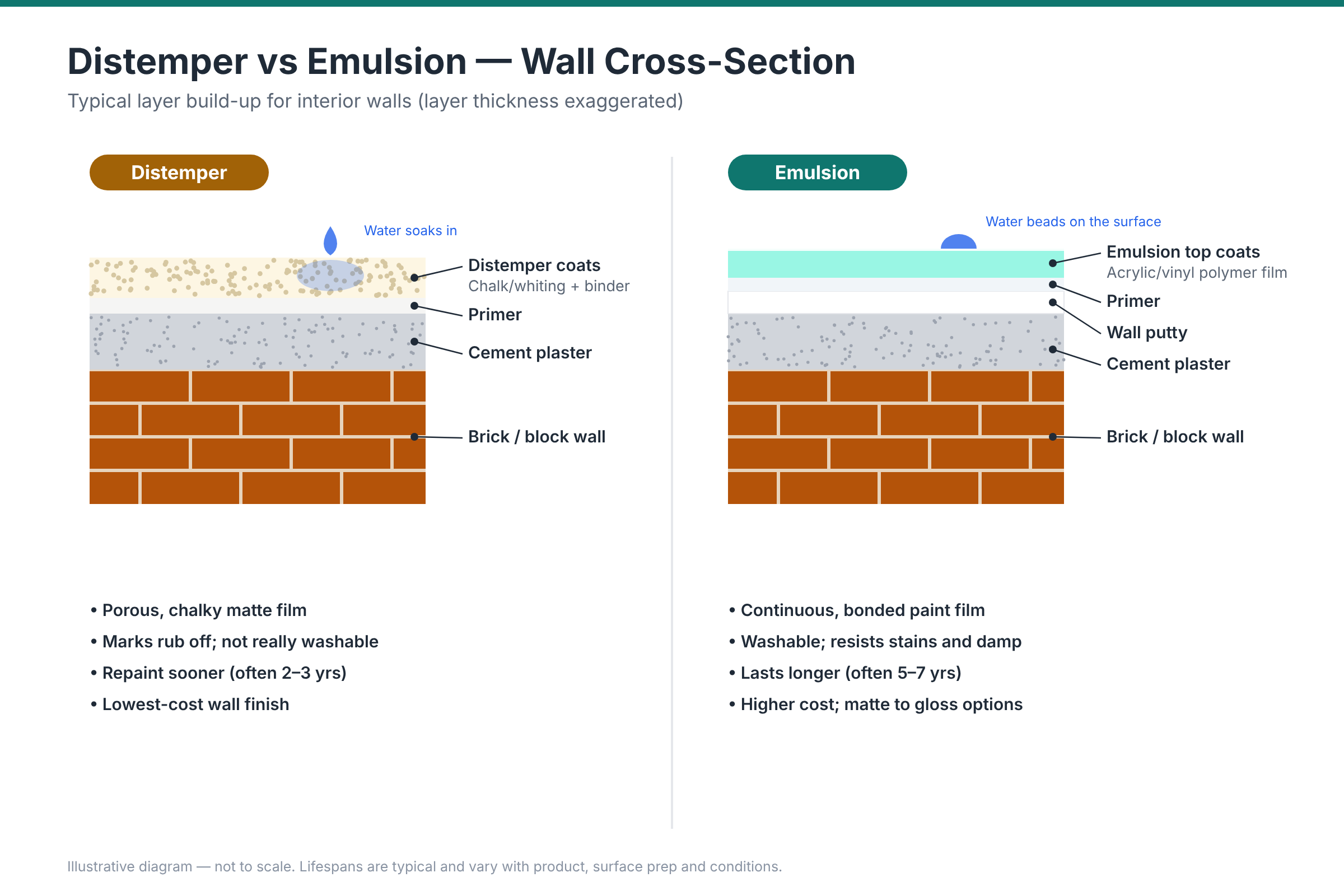
Emulsion is better for durability and cleaning, while distemper is better when the lowest cost matters most. Premium distempers and budget emulsions now cost about the same, so decide on washability and life.
Distemper
BudgetChalk-based matte finish with a light binder.
- Lowest cost per sq ft
- Light wiping at best
- Porous film, poor on damp walls
- Shorter repaint cycle
Emulsion
Busy roomsAcrylic or vinyl resin film, matte to gloss.
- Higher cost per sq ft
- Washable, many grades scrubbable
- Continuous film, better moisture resistance
- Lasts longer between repaints
Distemper is the sensible pick for ceilings and rooms nobody touches. Where hands, children or cooking come into play, emulsion earns its extra cost.
HomeRun Team
How Much Does Distemper Cost in India, and How Far Does It Go?
Acrylic distemper costs about ₹67–79 per kg in 20 kg packs, based on a 2026 dealer price list. Two coats cover about 80–110 sq ft per kg on smooth, primed plaster, as per the Asian Paints Tractor Acrylic Distemper data sheet.
Indicative distemper prices
Dealer list prices seen Nov 2026| Product | Pack | Price | Per kg |
|---|---|---|---|
| Asian Paints Tractor Acrylic Distemper | 20 kg | ₹1,580 | ₹79 |
| Asian Paints Tractor Synthetic Distemper | 20 kg | ₹1,344 | ₹67 |
| Nerolac Beauty Acrylic Distemper | 10 kg | ₹800–1,100 | ₹80–110 |
Labour usually costs more than the distemper. Asian Paints puts basic repainting labour at ₹8–12 per sq ft, about ₹4,200–6,300 for this room. Get a written quote, because Bengaluru rates vary with wall condition.
Everything for a distemper job
Order paint, primer and putty with a GST invoice and delivery across Bengaluru.
How Do You Apply Distemper Paint Step by Step?
You apply distemper paint by preparing a dry, clean wall, priming it, then brushing or rolling two thin coats with a drying gap between them.
- Check the wall: new plaster must cure fully first. Asian Paints asks for 28 days and Nerolac for at least 12 weeks, so follow your brand.
- Scrape and clean: remove loose or flaking paint, dust, grease and fungus.
- Fill and sand: fill cracks and holes with wall putty, then sand smooth and wipe off the dust.
- Prime: apply one coat of cement primer and let it dry. Water-thinnable primers need about 4–6 hours.
- Mix: thin with clean water as the pack says. Nerolac allows up to 1 litre of water per 1.5 kg of Beauty Acrylic Distemper.
- First coat: brush or roll in even strokes, working from the top of the wall down.
- Second coat: wait the recoat time, about 3–4 hours for Tractor Acrylic Distemper and 4–6 hours for Nerolac Beauty.
Prep
Cover furniture, scrape, fill cracks, sand and dust off.
Primer
One coat; leave 4–6 hours or overnight.
Coat 1
Thin as per the pack and apply evenly.
Coat 2
Apply after 3–6 hours, then let the room air out.
- Over-thinning: causes patchy, see-through coats. Stick to the pack ratio.
- Painting over damp: causes peeling within weeks. Fix the moisture first.
- Skipping primer: causes uneven colour and chalking. Prime bare or patched areas.
- Glossy or oily surfaces left unsanded: distemper will not grip. Sand or degrease first.
To switch from distemper to emulsion later, scrape off all loose distemper, sand, then prime before the first emulsion coat. Emulsion over chalky distemper peels with it. For more general prep advice, see our home painting tips.
How Long Does Distemper Last, and How Do You Maintain It?
Distemper lasts a few years on a dry interior wall, less on damp or busy walls. Brand claims for premium distempers sit around 2–3 years, such as Birla White's figure for Trutonex.
- Lifespan drivers: type, wall dryness, primer and how often the wall is touched.
- Cleaning: dust with a dry cloth. Wipe washable grades gently with a damp cloth only.
- Touch-ups: keep a labelled leftover tin from the same batch, because faded walls may not match a new tin.
For small holes, Asian Paints suggests acrylic wall putty or a 1:3 mix of white cement and fine sand. Read more on white cement and its properties.
Is Distemper Paint the Right Choice for Your Walls?
Distemper paint is the right choice for dry, low-traffic interior surfaces on a budget.
- Choose distemper for: ceilings, guest rooms, store rooms, rental flats and quick refreshes.
- Choose emulsion for: kitchens, children's rooms, living-room walls and any wall you clean often.
- Avoid both until fixed: walls with active seepage or salt bloom.
- Safety: wear a mask when mixing powder distemper or sanding, and keep children away from open tins.
Next step: check the wall for damp, pick a type, then ask for a price list or quote.