


On this page
- What Is Water Seepage, and How Is It Different From Leakage?
- What Causes Water Seepage in Indian Homes?
- How Can You Tell Seepage From Leakage, Rising Damp or Condensation?
- What Happens If You Leave a Damp Wall Untreated?
- Which Fixes Are Temporary and Which Are Permanent?
- How Much Does Seepage Repair Cost by Location?
- What Should You Do Before and During the Monsoon?
- Should You Fix Seepage Yourself or Hire a Professional?
- How Do You Repaint After a Seepage Repair?
- How Do You Prevent Water Seepage, and Who Is Responsible in a Flat?
- Water seepage is slow moisture moving through brick, plaster or concrete; leakage comes from one point.
- Diagnose before you fix: plumbing, rain, rising damp and condensation each need a different repair.
- Crack fillers and waterproof paint are stopgaps; fixing the source is the permanent cure.
- Asian Paints puts waterproofing at about ₹35–250 per sq ft depending on location and system (2026).
- Inspect terraces, drains and window frames before the monsoon, and let walls dry before repainting.
Water seepage is the slow movement of water through porous walls, slabs or plaster, which shows up as damp patches, bubbling paint and white salt marks. To fix it for good, you first find where the water enters, repair that source, and only then re-plaster and repaint.
What Is Water Seepage, and How Is It Different From Leakage?
Water seepage is diffuse moisture travelling through the pores and hairline cracks of a material, often worse after rain. Leakage is concentrated water escaping from a specific pipe, joint or crack, and is fixed at that point. Dampness is the resulting wet condition, which can have several sources, so diagnose before choosing a repair.
Water travels along slabs, pipes and wall cavities before it surfaces. A stain on your bedroom ceiling can start at a terrace crack several feet away, so fixing only the spot where the stain shows often fails.
What Causes Water Seepage in Indian Homes?
Water seepage in Indian homes comes from rain outside, plumbing inside, structural defects, or ground and air moisture.
- From outside: monsoon rain on external walls, terrace and roof slabs with failed waterproofing, gaps around window and door frames, blocked terrace drains.
- From inside: concealed pipe leaks, and bathroom or kitchen waterproofing that has failed under tiles and grout.
- From the structure: hairline cracks, porous brick and plaster, and honeycomb concrete left by poor compaction.
- From the ground and air: rising damp, where capillary action pulls ground moisture up the wall base, and condensation from humid air on cool walls.
Coastal and heavy-rainfall regions push more water at external walls and terraces, so outside protection matters most there.
How Can You Tell Seepage From Leakage, Rising Damp or Condensation?
You can tell them apart with a few simple tests, done in order, before spending anything on repairs. Early signs to note are damp patches, bubbling or peeling paint, white powdery efflorescence and a musty smell.
- Turn off the water. Shut all taps. If the water meter still moves, suspect a plumbing leak.
- Tape a square of foil to the damp area and leave it for a day or two. Water on the room side means condensation; damp under the foil means moisture coming through the wall.
- Check the height. A patch with a tide mark low on a ground-floor wall points to rising damp.
- Hose test the outside. Wet the external wall or terrace and watch whether the damp grows.
- Use a moisture meter to map how far the damp spreads. Salts can distort readings, so read it alongside what you see.
Where it shows up and what to check first
Quick self-diagnosis| Location of the patch | Likely source | Check first |
|---|---|---|
| Top-floor ceiling | Terrace or roof slab | Terrace cracks, drains, parapet joints |
| Ceiling below a bathroom | Bathroom floor or pipes | Grout, floor trap, water-off test |
| Low on ground-floor wall | Rising damp | Tide mark height, outside ground level |
| Wall next to bathroom | Concealed pipe or wall waterproofing | Water meter with taps shut |
| Around a window | Frame gaps or external wall cracks | Sealant and sill slope, hose test |
| Cold wall that sweats | Condensation | Foil test, ventilation |
What Happens If You Leave a Damp Wall Untreated?
Untreated seepage damages finishes, then health and, over time, the structure.
- Mould or a musty smell, which can aggravate allergies and asthma
- Damp around switchboards or wiring, which risks short circuits
- Rust stains or flaking concrete on slabs and beams, a sign of corroding reinforcement
- Peeling plaster, loose tiles and swollen wooden furniture
If water reaches a switchboard, switch off that circuit and call an electrician. Clean surface mould with gloves and a mask; it returns until the moisture stops.
Which Fixes Are Temporary and Which Are Permanent?
Crack fillers, sealants and waterproof or elastomeric paints are temporary unless the water source is also dealt with. Permanent fixes stop water at its entry point.
Seepage repair methods
Match the method to the cause| Method | Type | Best for |
|---|---|---|
| Crack filler, sealant, waterproof paint | Stopgap | Small surface cracks on the outer face |
| External waterproofing coat or membrane | Default pick | Terraces and external walls you can reach |
| Epoxy injection | Permanent | Dry, structural cracks |
| Polyurethane injection | Permanent | Wet or moving cracks |
| Internal (negative-side) coat | Partial | Basements or walls with no outside access |
| Plumbing repair, drainage correction | Permanent | Pipe leaks and water pooling at the wall |
Painting over a damp wall only hides seepage. Asian Paints notes that painting over an active leak will not stop it.
How Much Does Seepage Repair Cost by Location?
Repair costs depend on where the problem is and which system is used. Asian Paints' 2026 national averages give a starting range.
Method and indicative cost by location
₹ per sq ft, national average| Location | Typical method | ₹ per sq ft |
|---|---|---|
| Terrace and roof slab | Coating, membrane or PU system | 60–250 |
| Bathroom, ceiling below it | Re-do waterproofing under tiles, regrout | 40–120 |
| External wall, balcony | Crack repair plus waterproof coat | 35–100 |
| Basement and floor | Injection, negative-side coat, drainage | 120–300 |
Cost rises with area, surface condition, product system, access, and whether preparation and warranty are included. Check a bathroom quote by working out the area yourself.
What Should You Do Before and During the Monsoon?
Inspect and seal in the dry months, then contain active seepage during the rain.
Inspect
Check terrace, walls, window frames and bathrooms.
Repair and clear
Finish waterproofing and crack repairs, clean terrace drains and downpipes.
Contain and record
Protect electrics, move furniture, take dated photos, and plan permanent repair once walls dry.
- Terrace drains clear, no ponding (or routed to rainwater harvesting)
- Cracks in terrace, parapet and external walls sealed
- Window and door frame sealant intact
- External paint not peeling or chalky
- Bathroom grout and floor trap joints sound
Should You Fix Seepage Yourself or Hire a Professional?
DIY suits surface issues and small, clearly identified cracks. Hire a professional for recurring seepage, terraces, structural signs or a source you cannot pin down.
DIY treatment
Small, known causeCrack filler and a waterproof coat.
- Low cost and quick
- Works on small surface cracks
- No diagnosis of hidden sources
- Damp may return next monsoon
Professional diagnosis
Recommended defaultSite inspection, then a matched system.
- Traces the real source
- Handles terraces and injection work
- Written method and warranty
- Costs more upfront
Ask for a site inspection, a written method statement and the warranty's scope and exclusions.
- A quote given without seeing the site
- A "guaranteed fix" with no written warranty terms
- No mention of finding the source first
How Do You Repaint After a Seepage Repair?
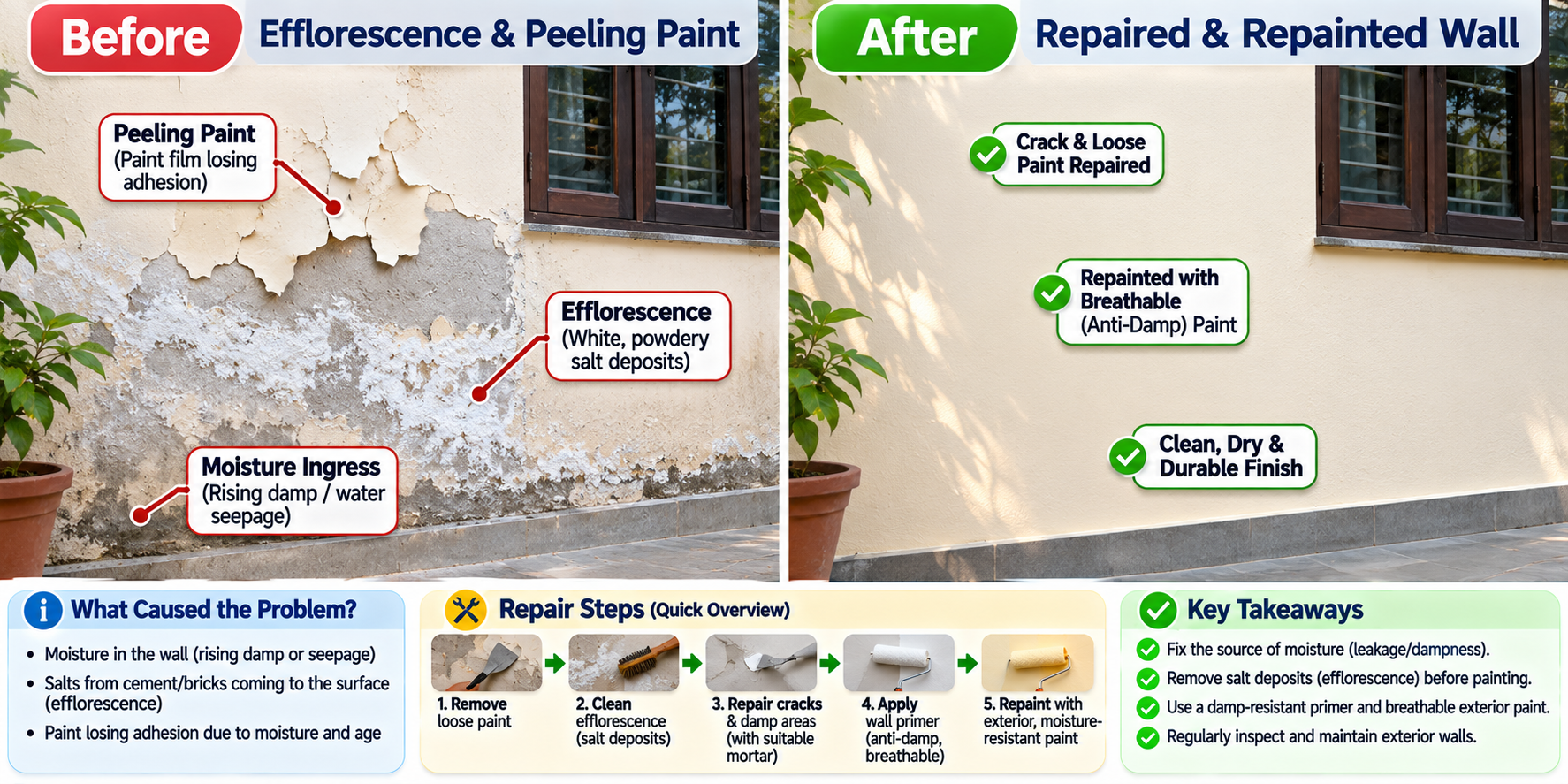
Repaint only after the treatment has cured and the wall is fully dry, in the right order.
- Let the waterproofing cure and the wall dry, as per the product's technical data sheet.
- Remove loose plaster and repair it.
- Apply wall putty, then primer.
- Finish with the paint coats the maker recommends.
Rushing traps moisture. Read how to fix damp patches on walls before painting.
How Do You Prevent Water Seepage, and Who Is Responsible in a Flat?
You prevent water seepage by building waterproofing in from the start and maintaining it every year. In new construction, that means waterproofing admixtures, proper curing, brickbat coba or a membrane on the terrace and a waterproofed sunken bathroom slab. Asian Paints puts waterproofing life at roughly 4–15 years, so plan renewals. In older homes, ventilate wet rooms with exhaust fans, inspect yearly and reseal and repaint on time.
Take dated photos, inform your neighbour in writing, and raise it with your RWA or housing society, which may handle common areas such as the terrace. If it stays unresolved, consumer or civil remedies may apply; check your society bye-laws, rent agreement and home insurance policy, and take legal advice before acting.
Waterproofing and repair materials
Waterproof coatings, crack fillers, wall putty and primers from trusted brands, delivered across Bengaluru.