On this page
- What Is a Latex Primer?
- What Are the Benefits of a Water-Based Primer?
- What Are the Drawbacks Compared With Oil-Based Primer?
- Which Surfaces Can You Prime in Indian Homes?
- How Do You Apply Latex Primer?
- How Much Primer Does a Room Need?
- Latex vs Acrylic Primer: Which Should You Choose?
- Latex primer is a water-based undercoat for emulsion paint.
- It dries fast and cleans up with plain water.
- It blocks rust and tannin stains poorly; use oil-based primer there.
- Nippon Paint asks for 12 weeks of plaster curing and moisture below 16%.
Latex primer is a water-based primer that seals porous surfaces so paint grips evenly. In Indian homes, latex primer goes on plaster before putty and emulsion.
What Is a Latex Primer?
A latex primer is a primer with a synthetic acrylic or vinyl-acrylic binder dispersed in water. Despite the name, it contains no natural rubber.
Every latex primer is water-based. Acrylic latex primer uses more acrylic resin, so it is tougher. Oil-based primer uses alkyd resin in a solvent.
What Are the Benefits of a Water-Based Primer?
The main benefits of latex primer are fast drying, low odour and easy cleanup.
- Quick to recoat: ready for the next coat in 4–6 hours.
- Low VOC: fewer volatile organic compounds (VOC), the solvent fumes that cause paint smell.
- Breathable film: lets moisture vapour escape, so it blisters less on masonry.
- Flexible: moves with plaster as it heats and cools, so it cracks less.
Latex primer under emulsion; oil-based primer under enamel on wood and metal.
What Are the Drawbacks Compared With Oil-Based Primer?
Latex primer is weaker than oil-based primer at blocking stains and protecting metal.
- Stains bleed through: rust, water marks and wood tannin can show.
- Bare iron can rust: a water-based coat on untreated steel invites flash rust.
- Weather-sensitive: Nippon says not below 10°C or above 85% humidity.
- Weak grip on gloss: sand old enamel dull first.
For wood, metal and stains, read our explainer on oil-based primer.
Which Surfaces Can You Prime in Indian Homes?
Latex primer is used on interior and exterior plaster, concrete, ceilings and gypsum or cement boards.
- Interior walls and ceilings, before acrylic wall putty and emulsion.
- Exterior plaster, with an exterior-grade latex primer that resists algae and fungus.
Indian options include Nippon Paint Latex Primer and JSD (SD Paints) 20-litre packs. Powdery exteriors need extra prep; see paint chalking.
How Do You Apply Latex Primer?
To apply latex primer, dry and clean the wall, thin the primer, roll one coat, putty, then roll a second coat.
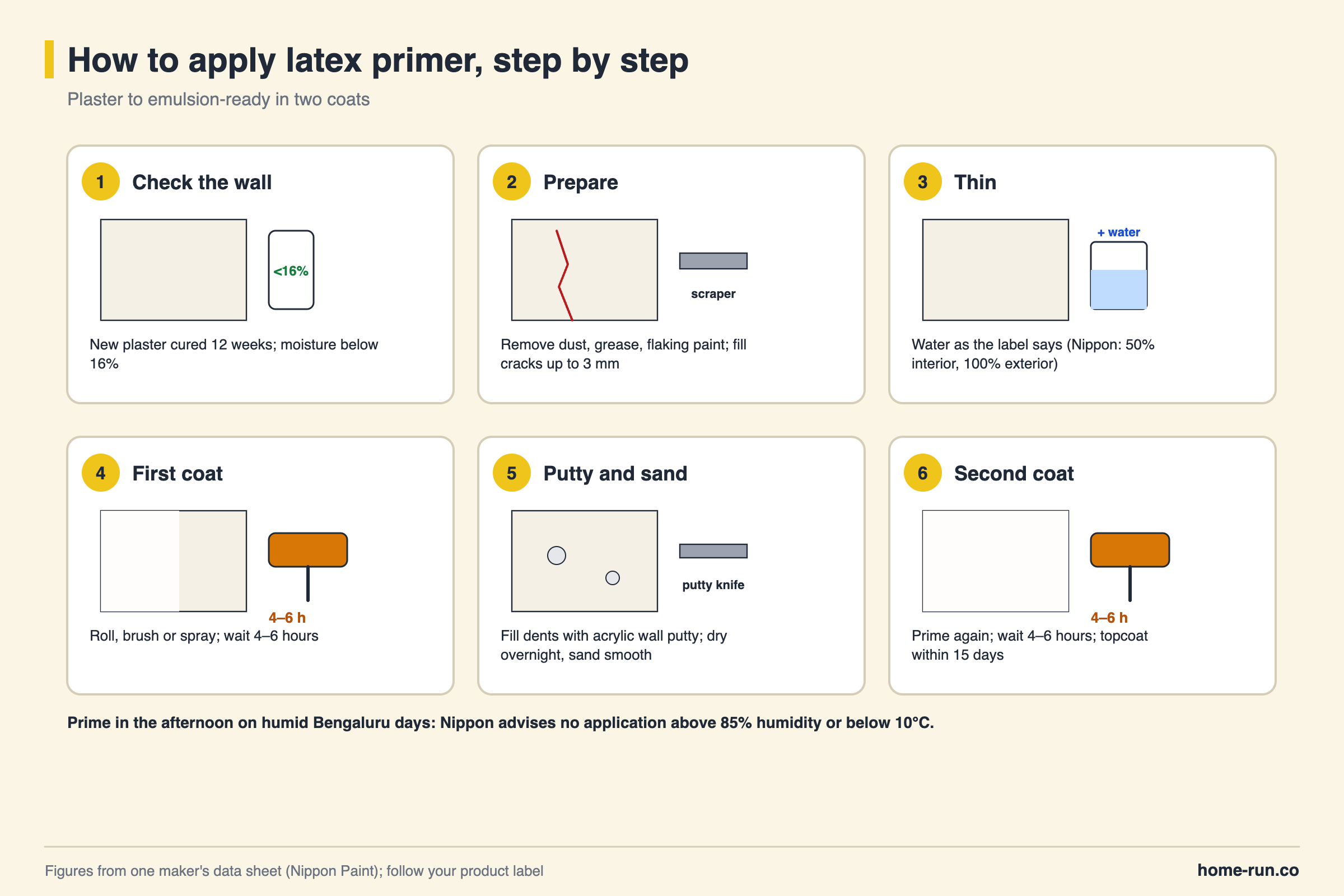
- Check the wall. Cure new plaster 12 weeks. Moisture should read below 16% and alkalinity below pH 9.
- Prepare. Remove dust, grease and flaking paint. Fill cracks up to 3 mm with crack filler.
- Thin. Add clean water as the label says: Nippon specifies 50% for interior and 100% for exterior primer.
- First coat. Roll, brush or spray. Wait 4–6 hours.
- Putty and sand. Fill dents with acrylic wall putty, dry overnight and sand smooth.
- Second coat. Prime again and wait 4–6 hours before the emulsion.
- Topcoat within 15 days of priming.
Bubbles after rain mean a damp wall; see paint bubbling on walls.
How Much Primer Does a Room Need?
A 12 × 10 ft bedroom with a 10 ft ceiling height needs about 3.5–3.8 litres of interior latex primer for two coats.
Priming walls this week?
Delivered across Bengaluru.
Latex vs Acrylic Primer: Which Should You Choose?
Choose latex primer for interior walls and acrylic latex primer for exteriors.
Latex primer
Interior wallsPoints
- Diluted acrylic or vinyl-acrylic binder
- Usually the cheaper option
- Less resistant to UV and rain
Acrylic latex primer
Exterior and wearPoints
- Higher share of acrylic resin
- Costs more per litre
- Resists water, mould and UV better