On this page
- Pick a steel tray with one wheel for most building sites.
- Litres is tray volume; kg is the rated load. A full tray can exceed the rating.
- Wet concrete is heavy: fill a 90 L, 160 kg barrow only to about 67 L.
- Keep the load over the wheel and check tyre pressure before each job.
A wheelbarrow is a hand-pushed cart with a tray, two handles and one or two wheels. On Indian sites, a wheelbarrow moves sand, cement, bricks and wet concrete over short distances.
What Is a Wheelbarrow and What Is It Used For?
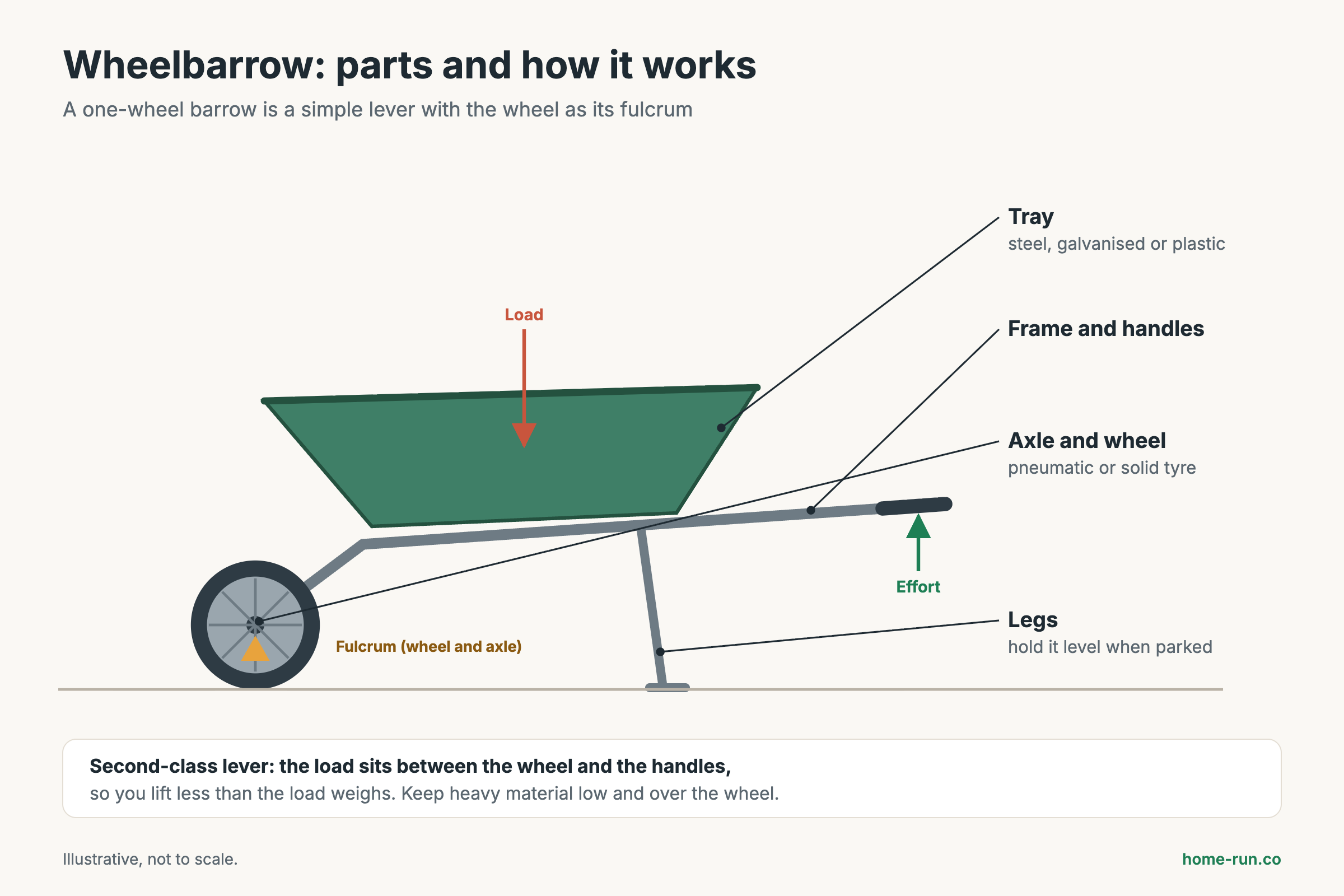
A wheelbarrow is a simple machine for carrying loads you cannot lift by hand. Its parts are the tray, frame, handles, legs, axle and wheel.
- Construction: sand, cement bags, bricks and small concrete batches.
- Garden: soil, manure and terrace-garden waste.
- Clean-up: renovation debris and site rubble.
The wheel is the fulcrum and the load sits between it and the handles. That makes a wheelbarrow a second-class lever: you lift less than the load weighs.
Which Type of Wheelbarrow Suits Your Job?
A steel single-wheel wheelbarrow suits most building work; a plastic tray suits light garden work.
Wheelbarrow tray materials compared
General guidance| Tray | Best for | Rust or damage risk |
|---|---|---|
| Painted mild steel Default pick | Concrete, sand, bricks | Rusts if paint chips |
| Galvanised steel | Wet work, frequent washing | Low rust; dents under impact |
| Plastic or poly Budget | Soil, garden waste | No rust; can crack under bricks |
Single-wheel wheelbarrow
Most sitesPoints To Remember
- Steers through doorways and site lanes
- Tips cleanly into a mixer or pit
- Can tip sideways if loaded unevenly
Double-wheel wheelbarrow
Heavy, level groundPoints
- Stays upright; some listings rate 200 kg
- Less effort to balance
- Too wide for narrow paths and planks
How Much Load Can a Wheelbarrow Carry?
A wheelbarrow carries its rated load in kg, not a full tray of every material. Listings pair a volume with a rating, such as 90 L with 160 kg or 65 L with 80 kg.
For batch quantities, see our M20 concrete ratio guide.
What Should You Check Before Buying?
Check the tray, tyre, frame and spare parts before you buy a wheelbarrow.
- Tray: a stated thickness; one listed site model uses 1.6 mm steel.
- Tyre: pneumatic for comfort, solid or puncture-proof for nail-strewn sites.
- Frame: continuous welds at the axle brackets and legs.
- Spares: replacement tyres and tubes sold locally.
Price rises with tray thickness, tyre type and frame build. Buy where you can inspect the welds in person.
Materials to move on site
Order with a GST invoice and delivery across Bengaluru.
How Do You Load and Maintain a Barrow Safely?
Load a wheelbarrow with the heaviest material low and over the wheel.
- Spread the load evenly from side to side.
- Lift with bent knees and a straight back.
- Push on firm ground; lay planks over soft patches.
- Tip forward over the wheel to unload.
SafeWork SA, the South Australian work-safety regulator, notes a full barrow of wet concrete can exceed 100 kg. Take smaller loads and more trips.
Wash off cement after use, store the barrow dry and patch or replace a flat tube. Stack fly ash bricks flat and low in the tray. Then check each course with a spirit level.