On this page
- What Is a Spade Tool and How Is It Different From a Shovel?
- How Is a Spade Blade Designed?
- What Types of Spades Are Used on Site and in the Garden?
- Where Do You Use a Spade Tool in Construction Ground Work?
- How Do You Choose the Right Spade?
- How Do You Look After a Spade Blade?
- A spade tool has a flat, sharp-edged blade for firm soil.
- Spades dig and trim; shovels scoop loose soil.
- On site, spades square up foundation and drain trenches.
- Pick a heat-treated steel blade with a wide foot tread, from a store or online.
A spade tool is a hand digging tool with a flat, straight-edged blade that you drive into the ground with your foot. It cuts and lifts firm soil and turf.
On site, it trims trench walls and cleans foundation pits. In the garden, it digs beds and edges lawns.
What Is a Spade Tool and How Is It Different From a Shovel?
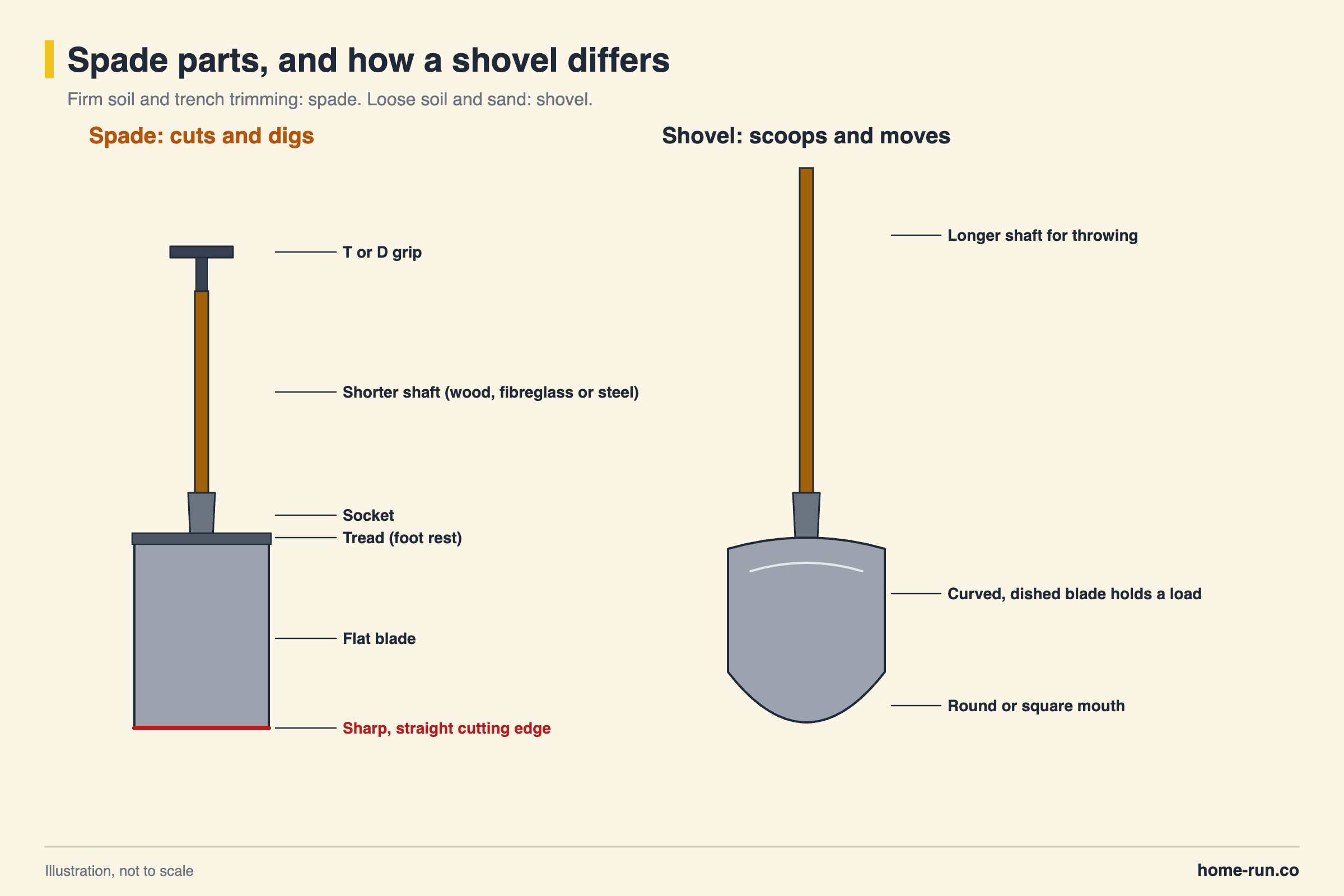
A spade is primarily a digging tool, while a shovel moves loose material over short distances. That is the split the Food and Agriculture Organization (FAO) uses in its hand tools guideline.
In Hindi, a spade is called a phawda or kudal, words also used for hoe-type tools. A blade set at an angle and pulled towards you is a hoe, not a spade.
How Is a Spade Blade Designed?
A spade blade is a flat steel plate with a sharpened lower edge that slices soil and roots. The other parts:
- Tread (footrest): the top edge your foot pushes on.
- Socket: grips the shaft.
- Shaft and grip: wood, fibreglass or steel, with a T-grip, D-grip or straight end.
The FAO guideline calls for medium carbon steel blades, hardened to Rockwell C 39–48 near the edge.
What Types of Spades Are Used on Site and in the Garden?
The main spade tool types are digging, drain (trench), border, transplanting and non-sparking spades. They differ mainly in blade size and shape.
Spade variants and their uses
Blade and best job| Spade type | Blade | Best for |
|---|---|---|
| Digging (garden) spade Default pick | Flat, rectangular, straight edge | Pits, trench trimming, beds, turf |
| Drain or trench spade Site work | Narrow, long, slightly curved, often pointed | Narrow drain, water and conduit trenches |
| Border spade | Smaller version of the digging spade | Edging beds and paving, tight spaces |
| Transplanting spade | Narrow, with a longer handle | Lifting plants with the root ball intact |
| Non-sparking spade Special | Aluminium bronze or beryllium copper alloy | Areas with flammable vapours or dusts |
Non-sparking spades are softer than steel and wear faster.
Where Do You Use a Spade Tool in Construction Ground Work?
A spade tool on a construction site does the finishing work a pickaxe or excavator leaves rough:
- Trimming foundation trench sides and bottoms to line and level.
- Cleaning pit bottoms before the PCC (plain cement concrete) bed.
- Digging narrow trenches for drains, water lines and earthing.
- Cutting roots in a trench or a soak pit.
Loose spoil is then scooped with a shovel or pulled with a hoe (mamoty) into a wheelbarrow for removal.
Firm clay or turf: spade. Loose soil or sand: shovel. Stony ground: break it with a pickaxe first, then trim with the spade.
Spade
Cut and digPoints
- Flat blade with a straight, sharp edge
- Foot tread for driving into firm soil
- Shorter shaft, T or D grip
- Trench trimming, pits, turf and roots
Shovel
Scoop and movePoints
- Curved, dished blade that holds a load
- Round or square mouth
- Longer shaft for throwing
- Loose soil, sand, aggregate and debris
Starting excavation this week?
Site tools and materials delivered across Bengaluru.
How Do You Choose the Right Spade?
Choose a spade tool by the job first, then by blade steel, handle and fit. Check these points before you buy:
- Blade suits the job: digging spade for pits, drain spade for trenches.
- Heat-treated carbon steel, not thin unmarked sheet.
- A grip at hip or waist height, so you lift without bending low.
- Fibreglass handles resist rot; wooden ones are cheaper and absorb shock.
How Do You Look After a Spade Blade?
You maintain a spade tool by cleaning, drying, sharpening and oiling it, since wet soil and cement slurry cause rust.
- Scrape, wash and dry. Remove soil and mortar, rinse, then wipe the blade and socket dry.
- Sharpen the edge. File the top side at the existing bevel.
- Oil the steel and wood. Wipe oil on the blade and rub linseed oil into wooden shafts.
- Store off the ground. Hang the spade in a dry, shaded place.
Soft blades bend and get scrapped early. A heat-treated blade with a replaceable handle wastes less steel.