On this page
- Plastic pipe needs a blade (ratchet cutter); metal pipe needs a cutting wheel.
- Stainless steel pipe needs a stainless-rated wheel.
- A 42 mm ratchet cutter takes CPVC up to 1½ inch (41.4 mm outside diameter).
- GI pipe up to 50 NB fits a 1/8–2 in wheel cutter; 80–100 NB needs a 2–4 in cutter.
A pipe cutter is a hand tool or machine that cuts pipe square to length without a saw. Pick a pipe cutter by two things: the pipe material and the pipe's outside diameter.
What Is a Pipe Cutter and How Does It Cut?
A pipe cutter cuts with either a blade or a cutting wheel.
- Blade cutters: a steel blade shears through plastic pipe.
- Cutting wheel cutters: a hardened steel disc scores deeper with each turn around the pipe until it cuts through.
Which Cutter Variants Suit Which Job?
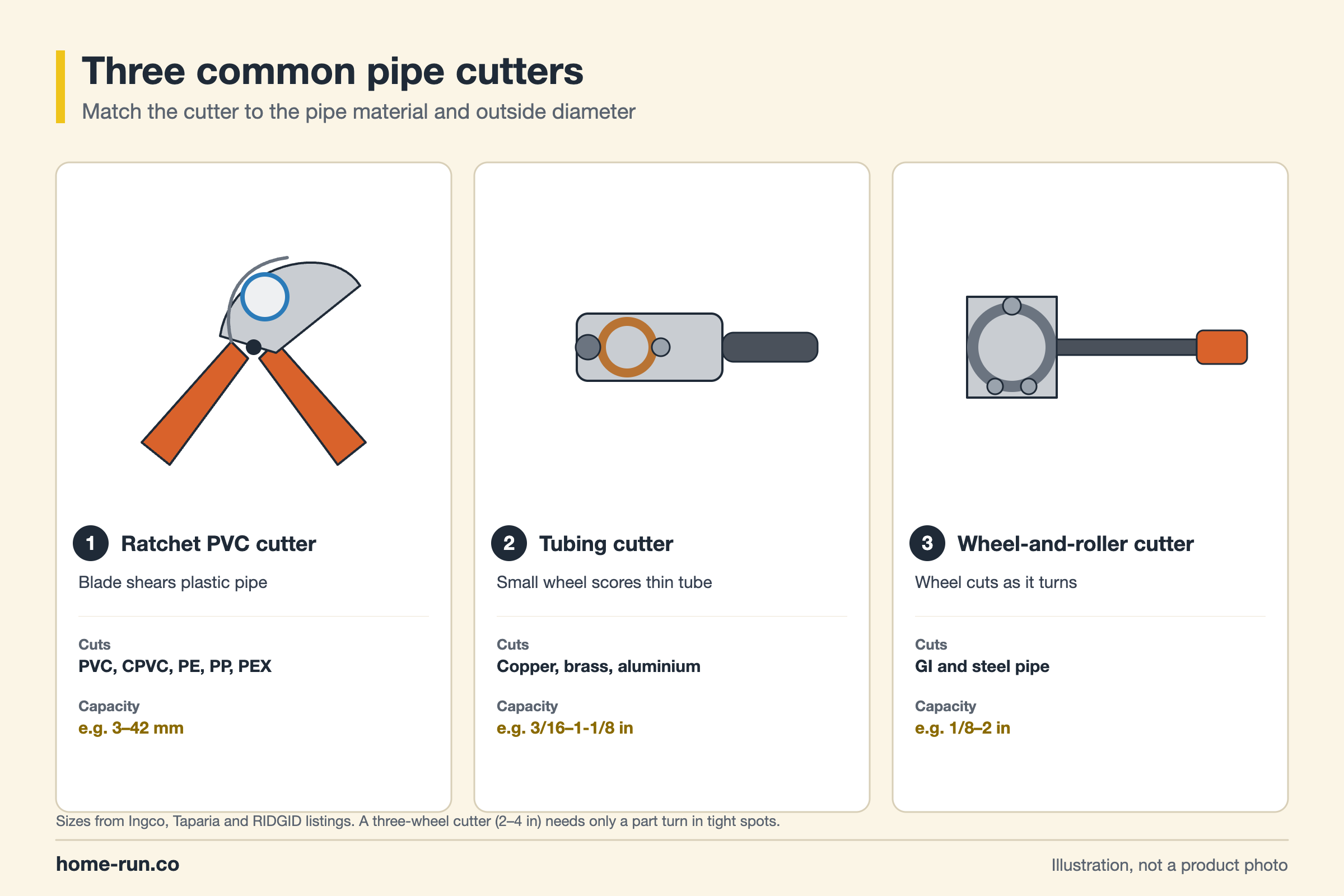
Hand pipe cutters come in four main variants; pipe cutter machines are the powered option.
Pipe cutter variants
Sizes from maker listings| Variant | Cuts | Example size range |
|---|---|---|
| Ratchet PVC cutter Home plumbing | PVC, CPVC, PE, PP, PEX | 3–42 mm (Ingco HPC0442), 42 mm (Taparia PC 42) |
| Tubing cutter | Copper, brass, aluminium tube | 3/16–1-1/8 in (RIDGID Model 15) |
| Wheel-and-roller pipe cutter | GI and steel pipe | 1/8–2 in (RIDGID 202) |
| Three-wheel pipe cutter | Steel pipe in tight spots | 2–4 in (RIDGID 4-S, 3-wheel) |
A three-wheel cutter needs only a part turn, so RIDGID suggests it where a full swing around the pipe is not possible.
Which Cutting Wheel Suits Which Pipe Material?
The cutting wheel must match the pipe metal, and makers sell separate wheels for each.
- Steel and ductile iron: standard steel-pipe wheels, such as RIDGID F-514 and F-229.
- Stainless steel: a stainless-rated wheel, such as RIDGID F-229S.
- Copper and aluminium: a tubing cutter with its own thinner wheel.
What Pipe Sizes Does Each Cutter Handle?
A pipe cutter's capacity is the largest outside diameter it can grip. Compare it with the pipe's outside diameter, not its nominal size.
Common Indian home pipes vs pipe cutter
Outside diameter (OD) from the pipe standard| Pipe | OD (mm) | Pipe cutter that fits |
|---|---|---|
| CPVC ½ in (15 mm) | 15.8–16.0 | 42 mm ratchet cutter |
| CPVC 1 in (25 mm) | 28.5–28.7 | 42 mm ratchet cutter |
| CPVC 1½ in (40 mm) Just fits | 41.2–41.4 | 42 mm ratchet cutter |
| CPVC 2 in (50 mm) Too big | 53.9–54.1 | Larger plastic cutter or saw |
| GI 15 NB to 50 NB | 21.0–60.8 | 1/8–2 in wheel cutter |
| GI 80 NB and 100 NB | 88.0–115.0 | 2–4 in pipe cutter |
NB (nominal bore) is the trade size of steel pipe. See the full plumbing materials list for where each pipe goes.
Manual Pipe Cutter or Pipe Cutter Machine?
A manual pipe cutter suits home plumbing; a pipe cutter machine suits workshops making many repeat cuts.
Manual pipe cutter
Home and site jobsHand-turned or hand-squeezed.
- No power supply needed
- Works on fixed pipe in walls and ducts
- Light enough for a tool bag
Pipe cutter machine
WorkshopsElectric, pneumatic or hydraulic drive.
- Needs power or compressed air
- Fast on repeated, large cuts
- Usually bench-mounted or heavy
How Do You Cut a Pipe Cleanly?
Use a wheel pipe cutter in five steps.
- Mark the cut line.
- Clamp the pipe in a vice.
- Close the wheel onto the mark.
- Rotate the cutter, tightening the feed screw slightly each turn.
- Ream the inner burr off the cut end.
For plastic pipe, line the ratchet blade with the mark and squeeze. Joining GI pipe after cutting? Use a pipe wrench to tighten threaded fittings.
Re-doing a pipe line?
Delivered across Bengaluru.
What Marks a Good Cutter, and How Do You Maintain It?
Choose a pipe cutter whose listed material and capacity match your largest pipe. Prices vary by brand and variant, so compare current listings before you buy.
- No capacity in mm or inches printed on the tool or pack
- Blade or wheel wobbles in its holder
- Ratchet slips or does not lock closed
Shut off and drain a line before cutting it. Wear gloves against sharp burrs and keep fingers clear of the blade.