On this page
- Glazed tiles carry a fused glass layer for colour and a stain-resistant face.
- The glaze sits on a ceramic body (walls) or a vitrified body (GVT, floors).
- Glossy glaze suits walls; matte or textured glaze suits floors, bathrooms and balconies.
- Check two numbers on the box: the PEI wear class and the R slip rating.
Glazed tiles are ceramic or vitrified tiles with a thin layer of liquid glass fired onto the face. The glaze gives the colour and design, and seals the top so water and stains stay on the surface.
What Are Glazed Tiles?
A glazed tile is a fired clay tile with glass-forming minerals and pigments melted onto its face. In the kiln, the coating fuses into a hard layer bonded to the body.
The tile has three layers:
- Body (biscuit): the pressed clay base that gives strength.
- Engobe: a thin primer coat that hides the body colour and helps the glaze bond.
- Glaze: the glassy top layer that carries the colour, print and finish.
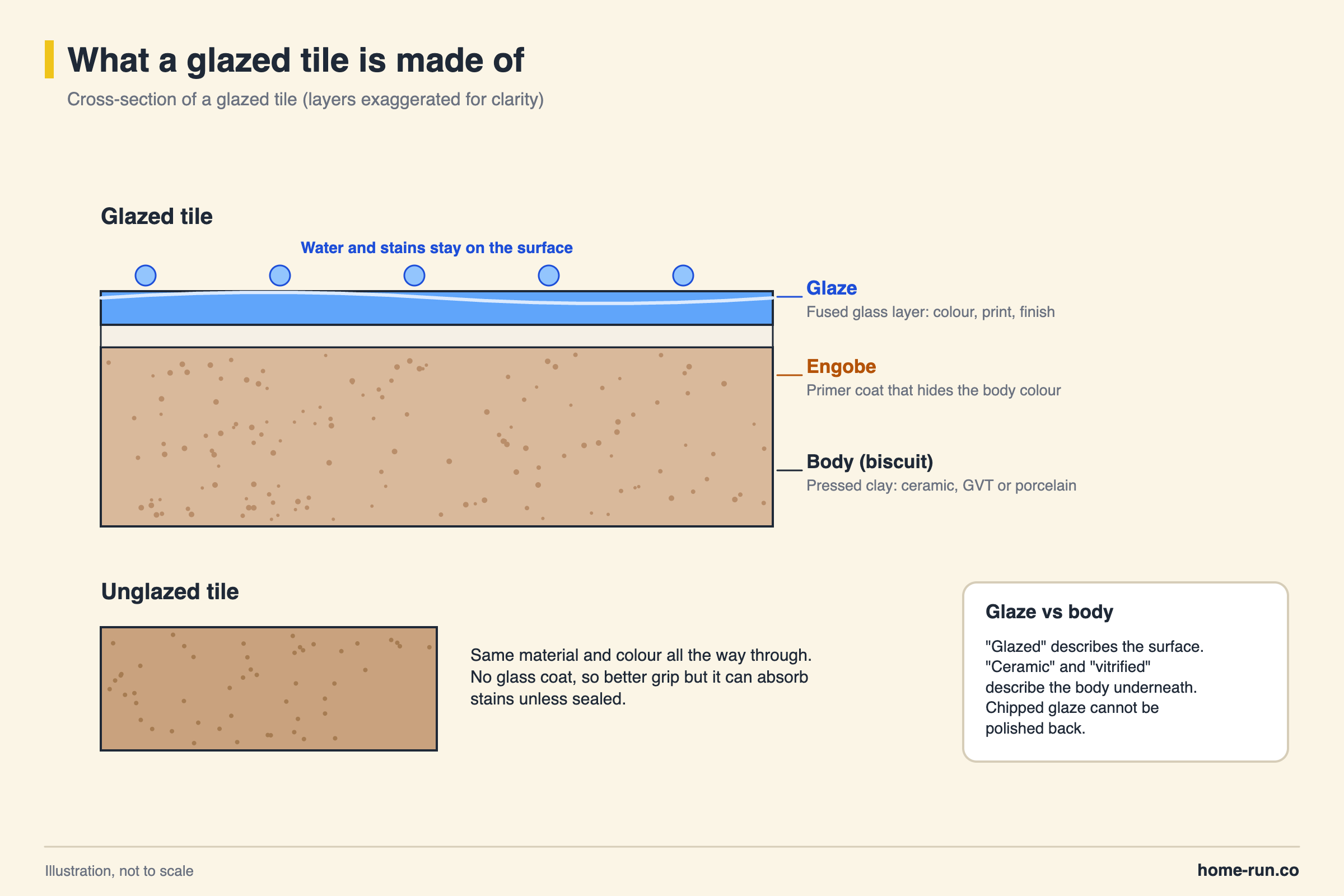
"Glazed" describes the surface; "ceramic" and "vitrified" describe the body. A tile can be glazed ceramic, glazed vitrified (GVT) or glazed porcelain.
What Changes When a Tile Has No Glaze?
An unglazed tile is the same material and colour all the way through, with no glass coat on top. That changes the look, grip and wear.
Glazed tiles
Most homesPoints
- Any colour or printed look, including marble and wood
- Surface shrugs off stains and is easy to wipe
- Glossy versions turn slippery when wet
- A deep chip shows the body colour underneath
Unglazed tiles
Heavy wearPoints
- Natural, earthy colours such as terracotta and full-body
- More porous types need sealing against stains
- Naturally better grip on wet floors
- Chips and wear show the same colour
For a wider view of tile bodies and stone options, see our guide to the types of tiles used in Indian homes.
What Are the Benefits of Glazed Tiles?
The main benefits of glazed tiles are a stain-proof face, easy cleaning and a wide choice of colours and prints.
- Easy to clean and hygienic: the sealed face gives dirt and mould few places to settle.
- Stain resistant: IS 15622 requires glazed tiles to resist household chemicals and to pass a crazing (fine-crack) test.
- Design range: digital printing copies marble, wood, stone and concrete.
- Hard surface: IS 15622 sets a scratch hardness of at least 5 on the Mohs scale for glazed floor tiles.
The trade-off: once grit dulls or chips the glaze, it cannot be polished out.
What Are the Types of Glazed Tiles?
Glazed tiles are grouped by finish and by body. The finish sets look and grip; the body sets strength.
Finishes: glossy, matte, satin and textured
Glazed tile finishes compared
Look, grip and best use| Finish | Look | Wet grip | Best for |
|---|---|---|---|
| Glossy | Shiny, reflects light | Low | Walls, backsplashes, bathroom dado |
| Matte Default for floors | Soft, no shine | Good | Bedrooms, kitchens, bathroom floors |
| Satin / sugar | Low sheen, fine sparkle | Medium | Living rooms and passages |
| Textured / rustic | Raised stone or wood feel | High | Balconies, sit-outs, wet floors |
| High gloss (PGVT) Slippery wet | Mirror polish | Lowest | Living rooms and foyers only |
Digital glazed tiles are not a separate finish: any finish above can carry an inkjet-printed design.
Ceramic, GVT and PGVT bodies compared
Glazed tile bodies and their vitrified alternative
Branded price per sq ft, before GST (Orientbell, May 2026)| Tile | Body | Top layer | Price (₹/sq ft) | Best for |
|---|---|---|---|---|
| Glazed ceramic wall | Porous ceramic | Glossy or matte glaze | 20–50 | Walls only (300×450 mm) |
| Glazed ceramic floor | Denser ceramic | Matte or textured glaze | 25–45 | Light-traffic floors (300×300 mm) |
| GVT Default pick | Vitrified, ≤ 0.5% absorption | Digitally printed glaze | 40–75 | Most home floors and walls (600×600 mm) |
| PGVT / large GVT | Vitrified | Glaze polished after firing | 80–140 | Living rooms, foyers (800×1600 mm) |
| Double charge Not glazed | Vitrified | 3–4 mm pigmented layer pressed in | 55–90 | Busy halls, shops, offices (600×600 mm) |
Glazed porcelain is close to GVT: a dense, low-absorption body with a glaze on top. Our guides to ceramic tiles and porcelain tiles cover those bodies in detail.
Which Finish and Rating Suits Each Room?
Glazed tiles suit almost every indoor wall and floor, as long as the finish and rating match the room.
Which glazed tile goes where
PEI wear class and R slip rating (DIN 51130)| Area | Glazed tile to use | Look for |
|---|---|---|
| Bathroom and kitchen walls | Glossy or matte glazed ceramic | Wall grade (PEI 0 is fine) |
| Bathroom floor | Matte or textured GVT or ceramic | R10 minimum, R11 in the shower |
| Kitchen floor | Matte GVT | PEI 3+, R10 near the sink |
| Bedrooms | Matte or satin GVT | PEI 3 |
| Living room and foyer | GVT or PGVT | PEI 3–4; PGVT only where it stays dry |
| Balcony and sit-out | Textured or rustic GVT | R11 |
Glazed clay roof tiles are a separate product, made and laid differently. Never use floor or wall tiles on a roof slope.
How Is the Glaze Applied and Fired?
Glazed tiles are pressed from clay powder, dried, coated with engobe and glaze, printed and fired. Most are single-fired, so body and glaze mature together.
Mix raw materials
Ball clay, kaolin, quartz and feldspar are ground with water into a slurry, then spray-dried to a fine powder.
Press and dry
A hydraulic press forms the tile, and a dryer removes moisture so it does not crack or warp.
Engobe, glaze and print
A primer coat, then a curtain or spray of glaze; an inkjet printer adds the design.
Fire
Ceramic tiles fire at about 1,000–1,250°C; vitrified and porcelain bodies need higher temperatures.
Double-fired (bicottura) tiles fire the body, then the glaze, and are used mainly for wall and decorative tiles.
How Do You Pick the Right Tile for a Room?
Choose glazed tiles by the room first, then by body, rating, size and finish.
- Wear (PEI): PEI 3 for home floors, PEI 4 for busy homes and light commercial, PEI 5 for shops and lobbies.
- Grip (R rating): R10 or R11 on any floor that gets wet.
- Size: 600×600 mm and 600×1200 mm suit most rooms; small rooms and bathrooms take 300×300 mm floor tiles well.
Glossy on walls, matte on floors. If a floor can get wet, check the R rating before the design.
Pieces per box vary, so check the box label. Adhesive, grout and labour are extra.
Tiling a room this month?
Tiles, adhesive and grout delivered across Bengaluru.
Red flags at the tile shop
- No PEI class on a floor tile box: you cannot tell whether the glaze will survive foot traffic.
- Shade or batch numbers differ between boxes: the colour will not match across the floor.
- Pinholes, bubbles or bare spots in the glaze: dirt and water collect there.
How Do You Install and Clean These Tiles?
Glazed tiles go on a level, cured base with tile adhesive and are grouted once it sets. The glaze needs no sealing.
- Prepare the base. Level the floor with screed and let it cure.
- Use adhesive for vitrified tiles. GVT absorbs very little water, so plain cement mortar bonds poorly.
- Keep joints even. Use spacers and levelling clips; large tiles need back-buttering.
- Grout and clean. Fill joints after the adhesive sets and wipe off haze before it hardens.
- Sweep often; sand and grit are what wear down the glaze.
- Mop with a pH-neutral cleaner; skip acids and abrasive powders.
Stained or cracked joints? Our bathroom tile grout guide covers grout types and repair.