On this page
- What Makes Teak Wood Different to Polish?
- Why Is Polishing Teak Wood Furniture Worth It?
- What Materials Do You Need for Teak Wood Polishing?
- What Is the Step-by-Step Teak Wood Polishing Procedure?
- Which Teak Wood Polish Is Best in India?
- Can You Make Natural Teak Wood Polish at Home?
- Should You Polish Teak Wood Yourself or Hire a Polisher?
- How Do You Maintain Polished Teak Wood?
- How Can You Spot a Poor Teak Polish Job?
- Teak wood polishing means clean, sand, seal, coat and buff, in that order.
- Pick the finish by use: teak oil for a natural look, PU for doors and tabletops that take wear.
- Sand with 180 grit, then 320–400 grit, and always follow the grain.
- Bengaluru polishers quoted ₹50–65 per sq ft for melamine and ₹100–120 for PU in March 2026.
- Re-oil oiled teak at least once a year; outdoor pieces may need it twice.
Teak wood polishing is the process of cleaning, sanding and coating teak with oil, wax, French polish, melamine or PU (polyurethane) to bring out its grain and protect it. Done well, it makes a dull teak door or table look close to new.
What Makes Teak Wood Different to Polish?
Teak (Tectona grandis) is a dense, naturally oily hardwood, which is why it resists rot and water but needs careful surface preparation before polishing. Seasoned teak weighs about 670 kg/m³.
- Durability: teak is rated Class 1 above ground, with a life expectancy of over 40 years (Queensland Government timber data).
- Natural oil: the wood feels greasy, so surfaces must be freshly sanded and dust-free before any coat goes on.
- Silica: teak contains silica, which blunts tools and wears sandpaper faster.
- Stable: it shrinks only 2.2% across the growth rings and 1.2% radially when dried to 12% moisture.
Teak is the classic Indian choice for main doors and heirloom furniture. Buying new timber? Read our guide to seasoning of timber first, because unseasoned wood will not hold a polish evenly.
Teak oil soaks in and leaves a soft sheen; PU or melamine forms a hard film on top. Teak wood cleaner only removes dirt and is not a finish.
Why Is Polishing Teak Wood Furniture Worth It?
Polishing teak wood furniture protects it from moisture, stains and sunlight, and restores the warm golden-brown colour that fades with age.
- Colour: unfinished teak turns a silver-grey over time. The grey layer does not weaken the wood, but most owners prefer the original tone.
- Moisture: a sealed surface slows water marks and swelling during Bengaluru's long monsoon months.
- Wear: a hard film like PU resists scratches on doors, handles and dining tables.
A good polish job is mostly preparation. The coat you see is only as smooth as the sanding underneath it.
HomeRun Team
What Materials Do You Need for Teak Wood Polishing?
For teak wood polishing at home you need cleaning supplies, sandpaper, a filler, your chosen finish and lint-free cloths. A professional PU job adds a sealer, thinner and a spray gun.
- Cleaner: mild detergent and white vinegar in water, or a teak wood cleaner
- Sandpaper: 180 grit, plus 320 or 400 grit for between coats
- Wood filler: to close dents, cracks and open pores
- Stain (optional): to even out or deepen the teak colour
- Sealer: closes the pores so the top coat sits evenly
- Finish: teak oil, wax, French polish, melamine or PU
- Applicators: lint-free cloths and a soft brush
- Safety kit: dust mask, gloves, good ventilation
What Is the Step-by-Step Teak Wood Polishing Procedure?
The teak wood polishing procedure is clean, sand, fill, seal, apply thin coats with light sanding between them, then buff. The same order works for furniture and for teak wood door polishing.
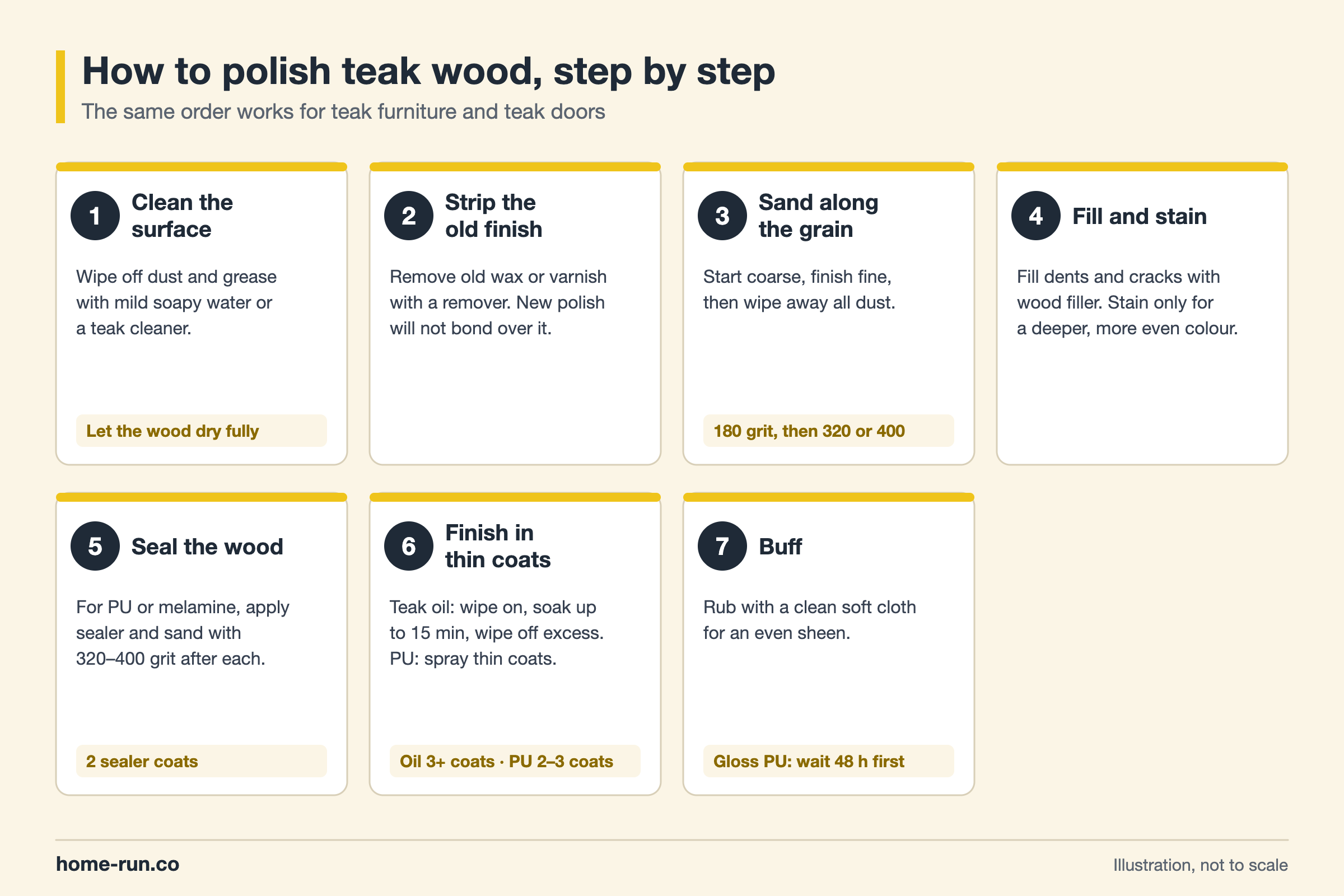
- Clean the surface. Wipe off dust and grease with mild soapy water or a teak cleaner. Let the wood dry completely.
- Strip the old finish. Remove old wax or varnish with a suitable remover or stripper. New oil or polish will not bond over it.
- Sand along the grain. Start with 180 grit, then finish with 320 or 400 grit. Wipe away all dust. A sanding machine saves hours on doors and large tops.
- Fill and stain. Fill dents and cracks with wood filler. Apply stain only if you want a deeper or more even colour.
- Seal the wood. For PU or melamine, apply two sealer coats, sanding with 320–400 grit after each.
- Apply the finish in thin coats. Teak oil: wipe on, let it soak for up to 15 minutes, wipe off the excess, and repeat after 24 hours for at least 3 coats. Interior PU: 2–3 spray coats, 8–12 hours apart.
- Buff the surface. Rub with a clean soft cloth for an even sheen. For a buffed gloss PU finish, wait 48 hours after the last coat.
- Sanding across the grain, which leaves scratches that show through every coat
- Leaving excess teak oil on the surface, which turns sticky
- Spraying PU when humidity is above 75%, which can cloud the film
- Bundling oily rags, which can self-ignite; lay them flat outdoors to dry
Asian Paints specifies 20–40°C and 75% humidity or less for its interior PU, so in Bengaluru plan spray work outside the June to November rains.
Clean, strip, sand and fill
Stain dries in 30–120 minutes.
Two sealer coats
Sand with 320–400 grit after each coat.
Two or three top coats
8–12 hours apart, within 72 hours.
Gentle use while the film hardens
Avoid hot dishes, wet cloths and heavy scrubbing.
Which Teak Wood Polish Is Best in India?
The best teak wood polish in India depends on use: PU for main doors and tables, melamine for a budget interior finish, and teak oil for a natural, easy-to-renew look.
Teak wood polish types compared
Labour rates: Bengaluru, March 2026| Finish | What it is | Look | Best for | Rate per sq ft |
|---|---|---|---|---|
| PU polish Default pick | Polyurethane film, sealer plus top coats | Matt to high gloss | Main doors, tabletops, high-wear pieces | ₹100–120 (spray) |
| Melamine Budget | Hard film finish, hand or spray | Satin to gloss | Interior doors, wardrobes, frames | ₹50 (hand), ₹60–65 (spray) |
| French polish | Shellac in spirit, per IS 348 | Deep, warm gloss | Antique and heirloom furniture | Not quoted |
| Teak oil | Penetrating oil, often tung and linseed | Natural, low sheen | Furniture, outdoor teak, DIY | Not quoted |
| Wax | Paste wax buffed over a finish | Soft sheen | Topping up old polish | Not quoted |
French polish is covered by IS 348:1968, the Indian specification for French polish: about 25% shellac by weight dissolved in spirit. It is flammable and goes over a filler coat, not bare wood.
- Oil-based vs water-based: solvent-based PU builds a hard film fast. Water-based PU, such as the Asian Paints Woodtech Aquadur range, has a lower odour, which suits occupied homes.
- Colours: teak wood polish colour comes from the stain, not the clear coat. Ask for a sample patch before the full job.
The door jamb and frame are measured and quoted separately, so ask for them as a separate line item.
Refinishing teak this week?
Wood finishes, sandpaper and tools delivered across Bengaluru.
Can You Make Natural Teak Wood Polish at Home?
Yes, simple home mixes can clean and refresh already-finished teak, but they do not replace a proper oil or PU finish. Use them for upkeep between polishing jobs.
- Cleaning mix: a small squeeze of dish detergent and 1 cup (about 240 ml) of white vinegar in 1 gallon (about 3.8 litres) of water. Wipe, then dry at once.
- Oil and vinegar polish: about ¼ cup of a light oil with a few drops of white vinegar. Rub in along the grain, then buff.
- Lemon polish: 2 tablespoons of fresh lemon juice with 2 or 3 drops each of lemon oil and a light oil such as jojoba.
Lemon juice and vinegar are acidic, so always dilute them and test on a hidden spot first. Skip acidic mixes on French polish and antique finishes, and never leave liquid standing on the wood.
Should You Polish Teak Wood Yourself or Hire a Polisher?
Polish teak yourself when the job is oiling or a small touch-up; hire a polisher for PU, melamine or a full teak wood door polishing job.
DIY polishing
Small jobsPoint
- Best for teak oil, wax and home cleaning mixes
- Low cost: sandpaper, oil and cloths
- Hand finish, so no spray-gun skills needed
- Takes several days because of 24-hour gaps between oil coats
Professional polisher
Doors and PUPoint
- Needed for spray PU, melamine and lacquer
- Bengaluru rates of ₹50–120 per sq ft by finish
- Brings sanders, spray gun and compressor
- Gives an even, factory-like film on large panels
How Do You Maintain Polished Teak Wood?
Maintain polished teak wood by dusting weekly, wiping spills at once, avoiding harsh chemicals and renewing the finish before it wears through.
- Dust often: use a soft dry or barely damp cloth.
- No harsh cleaners: skip bleach-heavy sprays, power washers and metal brushes.
- Re-oil on time: oiled teak needs a fresh coat at least once a year; outdoor teak may need it twice.
- Touch up PU early: a light sand and top coat on a worn patch costs far less than a full strip.
How Can You Spot a Poor Teak Polish Job?
A poor teak polish job shows up as a sticky, cloudy, rough or patchy surface within days or weeks.
- Sticky or tacky feel: excess oil was not wiped off.
- White haze or cloudiness: coats applied in damp, humid weather.
- Visible scratches or swirls: sanding across the grain or skipping finer grits.
- Peeling or flaking: new finish laid over old wax or varnish.
Paint and hardware stores stock PU, melamine, teak oil and sandpaper; online stores suit small sprays. Buy the sealer and thinner from the same range as the finish.