On this page
- What Are the Main Types of Wooden Column?
- How Do You Choose the Right Wooden Column Size and Design?
- How Is a Wooden Column Installed?
- How Do You Care for Wooden Columns?
- Are Wooden Columns an Eco-Friendly Choice?
- A wooden column is a vertical timber member that carries load, decorates, or both.
- Structural columns need an engineer's design under IS 883:2016; decorative ones mostly need secure fixing.
- Teak heartwood is highly durable, but sapwood must always be treated (IS 401:2001).
- Never set a wooden column directly on soil or a wet floor; use a stone or metal base.
A wooden column is a vertical timber member that supports a beam or roof, frames an entrance, or simply decorates a room. In Indian homes, a wooden column is usually teak, either load-bearing on a verandah or a cladding over an RCC (reinforced cement concrete) pillar.
What Are the Main Types of Wooden Column?
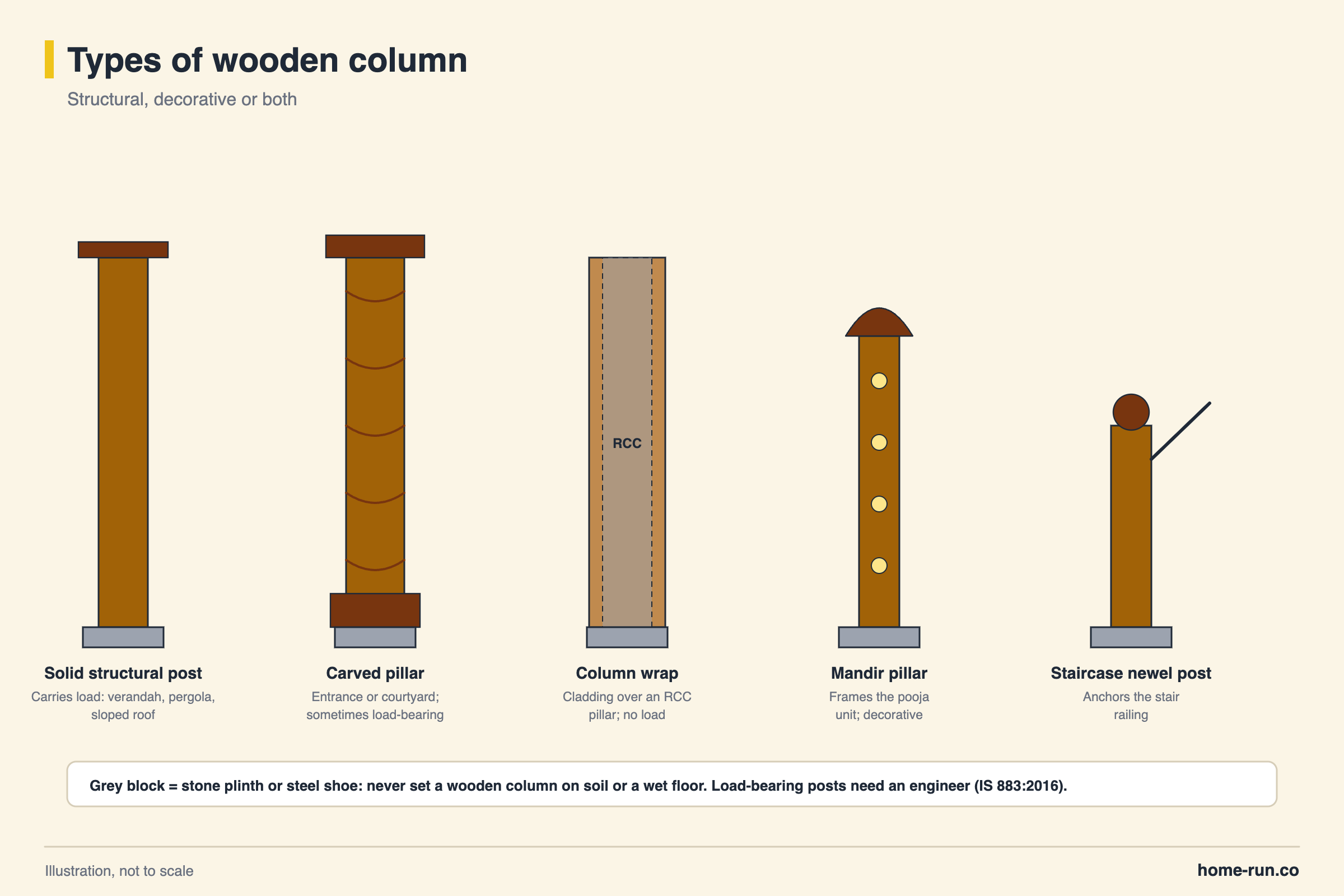
Wooden columns are either structural, carrying load, or decorative.
Types of wooden column and their uses
Common in Indian homes| Type | Carries load? | Typical use |
|---|---|---|
| Solid structural post Engineer needed | Yes | Verandah, pergola, sloped-roof support |
| Carved pillar (Chettinad style) | Sometimes | Entrance, courtyard, home front |
| Column wrap or cladding | No | Covers an RCC pillar in a living room |
| Pooja room or mandir pillar | No | Frames the mandir, often ornate |
| Staircase newel post | Railing only | Anchors the stair railing |
How Do You Choose the Right Wooden Column Size and Design?
Choose a wooden column by its job first, then size and style:
- Purpose: if it carries load, an engineer sizes it under IS 883:2016, the Indian code for design of structural timber in buildings.
- Size: match diameter to height and room scale; 8–9 ft carved pillars suit most ground floors.
- Wood: seasoned teak for exposed or load-bearing use (see how to identify teak wood).
- Style: plain or fluted for modern rooms, carved for entrances and mandirs.
Coimbatore-area listings in November 2026 price carved teak pillars of 8–9 ft at about ₹18,000–42,000 each; small 36 in decorative pieces start near ₹1,000.
How Is a Wooden Column Installed?
A wooden column is installed on a raised, level base with a metal anchor, never sunk into soil:
- Measure floor-to-beam height at the exact spot.
- Cut and drill first. IS 401 advises finishing cutting and boring before preservative treatment.
- Treat sapwood and end grain; brush any later cuts with an organic solvent preservative.
- Set a plinth of granite or a steel shoe that lifts the wood above the floor.
- Fix and plumb. Bolt top and bottom, then check vertical with a spirit level.
A column under a beam or roof needs a structural engineer and temporary propping. Do-it-yourself fixing suits only cladding and decorative pillars.
How Do You Care for Wooden Columns?
Wooden columns last longest when kept dry, sealed and checked for termites. Dust weekly, reseal or polish every few years, and inspect the base after each monsoon.
For finish options see teak wood polishing, and for why dry wood moves less, seasoning of timber.
Are Wooden Columns an Eco-Friendly Choice?
Wooden columns are eco-friendly when the timber is legally sourced or reclaimed. Reclaimed teak pillars come already seasoned.
IS 401 rates teak Class I: an average life of 120 months or more even in ground contact. Fewer replacements means less timber used.
Fitting columns or woodwork this week?
Plywood, hardware and finishes delivered across Bengaluru.