


0 items
Rs. 0.00

Please enter Pincode to check delivery time & serviceability
ನಿಮ್ಮ ಕಾರ್ಟ್ಗೆ ಐಟಂ ಸೇರಿಸಲಾಗಿದೆ


ಉಪಲಬ್ದವಿದೆ

ಪಿಕಪ್ ಲಭ್ಯತೆಯನ್ನು ಲೋಡ್ ಮಾಡಲು ಸಾಧ್ಯವಾಗಲಿಲ್ಲ
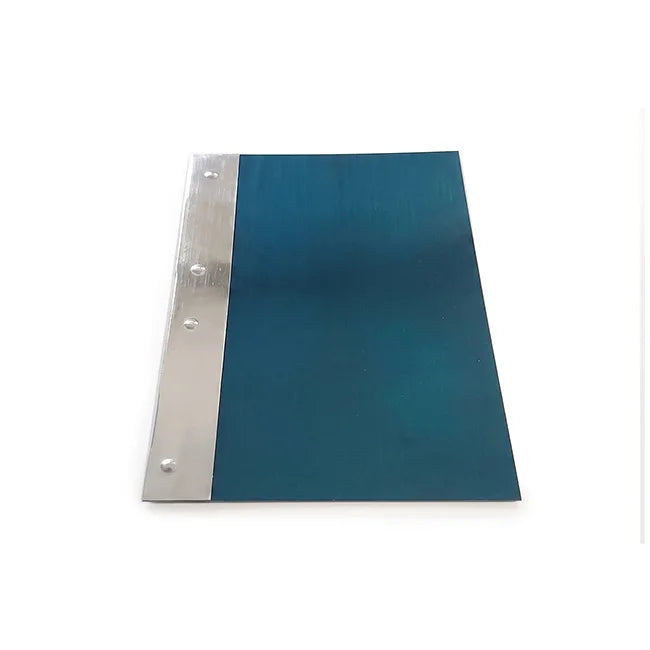
Putty Blade (Stainless Steel) is a professional construction tool, designed for applying wall putty, jointing compounds, scraping surfaces, and creating smooth finishes with corrosion-resistant stainless steel construction.
Putty Blade (Stainless Steel) is a professional-grade construction tool engineered for applying wall putty, jointing compounds, and creating smooth, even finishes on walls and ceilings. The stainless steel construction provides superior corrosion resistance, ensuring long-term durability even in humid or wet conditions.
Available in three sizes—4" for small areas and detail work, 6" for general applications, and 8" heavy-duty for large surfaces—these blades offer versatility for various project requirements. The easy-to-clean surface and minimal maintenance requirements make them ideal for professional contractors and DIY enthusiasts. The rigid blade design ensures consistent pressure distribution for professional-quality finishes.
| Specification | Details |
|---|---|
| Material | Stainless steel |
| Available Sizes | 4" (detail work), 6" (general use), 8" (heavy-duty) |
| Corrosion Resistance | Yes, stainless steel construction |
| Grade | Professional construction tool |
| Maintenance | Easy cleaning, minimal upkeep |
Choose based on application: 4" for corners, edges, and detail work; 6" for general wall putty application and medium areas; 8" heavy-duty for large flat surfaces and faster coverage. Professionals often keep all three sizes for versatility.
Clean immediately after use with water before putty dries. For dried putty, soak in water and scrape off. Dry thoroughly after cleaning. Stainless steel blades resist rust but handles may corrode if left wet. Store in dry location.
Yes, putty blades work well for scraping loose or flaking paint. However, for heavy paint removal, use a dedicated paint scraper with thicker blade. Putty blades are thinner and more flexible, better suited for smoothing than aggressive scraping.
Putty blades are flat, flexible, and designed for thin applications (putty, joint compound). Trowels are thicker, more rigid, and designed for thicker materials (plaster, mortar). Use putty blades for finishing work, trowels for heavy-duty applications.
Common causes: (1) Blade edge is damaged or nicked, (2) Too much pressure applied, (3) Putty consistency too thick, (4) Blade held at wrong angle, or (5) Dried putty on blade edge. Check blade condition and technique.
Keep a damp cloth nearby to wipe blade frequently. Work in manageable sections. For long sessions, dip blade in water periodically to prevent buildup. Mix putty in small batches to avoid premature drying.
Putty blades don't require sharpening like knives. If the edge is damaged or nicked, file it smooth with fine metal file. For severely damaged blades, replacement is more cost-effective than extensive repair. Quality stainless steel blades last years with proper care.



0 items
Rs. 0.00
