

 Pay on Delivery
0 items
Rs. 0.00

Please enter Pincode to check delivery time & serviceability
ನಿಮ್ಮ ಕಾರ್ಟ್ಗೆ ಐಟಂ ಸೇರಿಸಲಾಗಿದೆ
 Free Delivery
on first 5 orders
Free Delivery
on first 5 orders
ಉಪಲಬ್ದವಿದೆ

ಪಿಕಪ್ ಲಭ್ಯತೆಯನ್ನು ಲೋಡ್ ಮಾಡಲು ಸಾಧ್ಯವಾಗಲಿಲ್ಲ
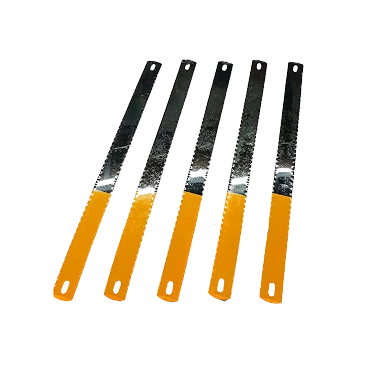
Trim Cut Hacksaw Blade is a professional-grade cutting tool for metal, plastic, and CPVC pipes, designed for precise, clean cuts in plumbing installations and general metalworking with hardened steel construction and fine-tooth design.
Trim Cut Hacksaw Blade is engineered for professional plumbing and metalworking applications requiring precision cuts. Manufactured from high-carbon steel with heat treatment for superior hardness, this blade delivers clean, square cuts in CPVC pipes, metal conduits, and various materials without excessive burring or deformation. The fine-tooth configuration ensures smooth cutting action and extended blade life, making it ideal for CPVC plumbing installations where clean pipe ends are essential for proper solvent cement bonding.
The blade's optimized tooth geometry reduces cutting effort while maintaining straight, accurate cuts critical for professional plumbing work. Compatible with standard 12-inch hacksaw frames, this blade is an essential tool for installing Ashirvad Flowguard Plus CPVC systems and general construction applications. The durable construction withstands repeated use in demanding job site conditions, providing reliable performance for both professional plumbers and DIY enthusiasts.
| Specification | Details |
|---|---|
| Blade Type | Hacksaw Blade for Metal & Plastic |
| Material | High-carbon hardened steel |
| Length | 12 inches (300mm) - Standard size |
| Tooth Configuration | Fine teeth for smooth cutting |
| Treatment | Heat-treated for durability |
| Compatibility | Standard 12-inch hacksaw frames |
Yes, a fine-tooth hacksaw blade is ideal for cutting CPVC pipes. It provides clean, square cuts without cracking or deforming the pipe, which is essential for proper solvent cement bonding. After cutting, always deburr the inside and outside edges and chamfer the pipe end at 10-15° for optimal fitting insertion and joint strength.
Fine-tooth blades (24-32 TPI) are ideal for thin-wall materials like CPVC, PVC, and thin metal pipes, providing smooth cuts with minimal burring. Coarse-tooth blades (14-18 TPI) are better for thick, soft materials like aluminum and wood. For CPVC plumbing work, always use fine-tooth blades to ensure clean cuts.
Install the blade with teeth pointing forward (away from the handle) so cutting occurs on the push stroke. Secure both blade pins in the frame slots and tension the blade properly using the wing nut or tensioning mechanism. A properly tensioned blade should produce a slight "ping" sound when plucked and cut straight without bending.
Blade life depends on material being cut and cutting technique. For CPVC plumbing, a quality blade can cut 50-100 pipes before dulling. Signs of a worn blade include difficulty cutting, wandering cuts, and excessive heat generation. Replace blades when cutting becomes laborious or cuts are no longer square and clean.
Yes, hacksaw blades are versatile cutting tools suitable for metal rods, bars, bolts, threaded rods, plastic sheets, and various construction materials. However, select the appropriate tooth count (TPI) for the material thickness—fine teeth for thin materials and coarse teeth for thick, soft materials. Avoid cutting wood or masonry, which require specialized saw blades.
0 items
Rs. 0.00
