

 Pay on Delivery
0 items
Rs. 0.00

Please enter Pincode to check delivery time & serviceability
ನಿಮ್ಮ ಕಾರ್ಟ್ಗೆ ಐಟಂ ಸೇರಿಸಲಾಗಿದೆ
 Free Delivery
on first 5 orders
Free Delivery
on first 5 orders
ಉಪಲಬ್ದವಿದೆ

ಪಿಕಪ್ ಲಭ್ಯತೆಯನ್ನು ಲೋಡ್ ಮಾಡಲು ಸಾಧ್ಯವಾಗಲಿಲ್ಲ
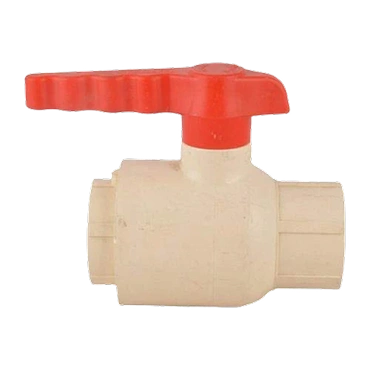
Ashirvad Flowguard Plus CPVC Ball Valve is a quarter-turn shut-off valve for controlling water flow in CPVC piping systems, designed for isolating fixtures, appliances, and pipe sections in hot and cold water applications with durable, leak-free operation.
Ashirvad Flowguard Plus CPVC Ball Valve provides reliable on/off control for hot and cold water distribution systems. Featuring a precision-engineered ball mechanism housed in a corrosion-resistant CPVC body, this valve delivers smooth quarter-turn operation with minimal effort. The full-port design ensures unrestricted water flow when open, while the tight sealing mechanism provides complete shut-off when closed, making it ideal for isolating fixtures, appliances, or pipe sections during maintenance.
The valve's CPVC construction ensures compatibility with Ashirvad Flowguard Plus piping systems and eliminates the corrosion issues common with all-metal valves. The ergonomic handle provides clear visual indication of valve position (parallel to pipe = open, perpendicular = closed), while the robust internal components ensure thousands of trouble-free open/close cycles. Essential for geyser isolation, fixture shut-offs, and emergency water control, this ball valve integrates seamlessly with solvent-welded CPVC installations.
| Specification | Details |
|---|---|
| Valve Type | Ball Valve (Quarter-turn) |
| Body Material | CPVC (Chlorinated Polyvinyl Chloride) |
| Ball Material | Brass/Stainless Steel |
| Maximum Temperature | 93°C (200°F) continuous service |
| Pressure Rating | PN 15 (15 kg/cm² at 25°C) |
| Connection Type | Socket (Solvent Weld) - Both ends |
A ball valve uses a quarter-turn (90°) rotating ball for quick on/off control and provides full-port flow with minimal pressure drop when open. A gate valve uses a sliding gate mechanism requiring multiple turns to open/close and is better for throttling flow. For CPVC plumbing, ball valves are preferred for their compact size, quick operation, and reliable sealing.
No, ball valves are designed for full on/off operation only, not for throttling or flow control. Operating a ball valve in a partially open position can cause turbulence, vibration, and premature wear of the ball and seals. For flow rate control, use a globe valve or flow control valve designed for throttling applications.
The handle position indicates valve status: when the handle is parallel (in line) with the pipe, the valve is OPEN; when the handle is perpendicular (at 90°) to the pipe, the valve is CLOSED. This visual indication allows quick status verification without testing water flow, making ball valves ideal for emergency shut-off applications.
Yes, Ashirvad Flowguard Plus CPVC ball valves are specifically designed for hot water service up to 93°C (200°F). The CPVC body and high-temperature seals ensure reliable operation in geyser lines, solar heater systems, and hot water distribution. However, ensure the valve is rated for hot water use and avoid using standard PVC or low-temperature valves in hot water applications.
To prevent seizing and maintain smooth operation, exercise ball valves (open and close fully) at least once every 3-6 months, even if they're not regularly used. This prevents mineral deposits and scale buildup from locking the ball mechanism. For valves in hot water service or hard water areas, monthly operation is recommended to ensure they function properly during emergencies.
0 items
Rs. 0.00
