
 Pay on Delivery
0 items
Rs. 0.00

Please enter Pincode to check delivery time & serviceability
ನಿಮ್ಮ ಕಾರ್ಟ್ಗೆ ಐಟಂ ಸೇರಿಸಲಾಗಿದೆ
 Free Delivery
on first 5 orders
Free Delivery
on first 5 orders
ಉಪಲಬ್ದವಿದೆ

ಪಿಕಪ್ ಲಭ್ಯತೆಯನ್ನು ಲೋಡ್ ಮಾಡಲು ಸಾಧ್ಯವಾಗಲಿಲ್ಲ
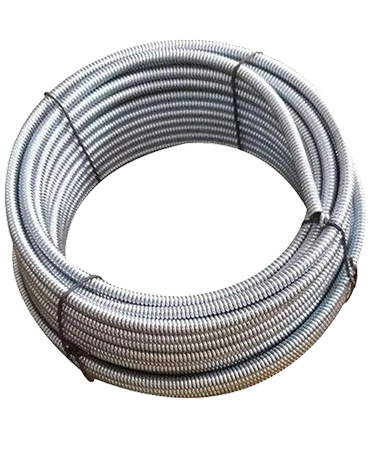
Electrical Spring (Fish Tape) is an essential wire-pulling tool consisting of a flexible, zinc-coated spring steel wire designed to navigate through electrical conduits and pull cables efficiently. Available in 8.2 metre and 16.4 metre lengths, the tool is indispensable for electricians working on residential, commercial, and industrial projects where wires need to be fed through conduit systems. The zinc coating provides corrosion resistance for long-term durability in site and storage conditions where moisture exposure is common. The spring's flexibility allows it to navigate bends and corners in conduit runs while maintaining sufficient rigidity to push through longer distances without buckling.
The 8.2 metre variant is suited to residential and light commercial work - shorter conduit runs, single-floor circuits, and installations where the conduit layout has limited bends and a compact run length. The 16.4 metre variant is the correct choice for longer conduit runs - multi-storey buildings, commercial installations, and industrial facilities with extended horizontal or vertical conduit spans where a shorter fish tape would not reach the exit point. Whether used on new installations or retrofit projects, the electrical spring significantly reduces wire-pulling time and effort compared to attempting to push cables directly through conduit without a guide tool.
| Specification | Details |
|---|---|
| Material | High-tensile spring steel |
| Coating | Zinc coated for corrosion resistance |
| Available Lengths | 8.2 metres and 16.4 metres |
| Function | Wire and cable pulling through conduit systems |
| Flexibility | Navigates bends and corners in conduit runs |
| Applications | Residential, commercial, and industrial electrical work |
| Length | Best For |
|---|---|
| 8.2 metres | Residential wiring, single-floor commercial circuits, shorter conduit runs, and retrofit projects where run lengths are compact and conduit layouts are straightforward |
| 16.4 metres | Multi-storey buildings, commercial complexes, industrial facilities, and long horizontal conduit runs where 8.2 metres is insufficient to reach the exit point |
Choose based on your typical conduit run lengths. The 8.2 metre spring suits residential work and shorter commercial runs - single-floor circuits, compact conduit layouts, and retrofit projects where run lengths are manageable. The 16.4 metre spring is required for longer spans - multi-storey buildings, large commercial floor plates, industrial facilities, and long horizontal conduit runs between distribution boards and outlet points. If you regularly work across both types of installation, keeping both lengths available prevents being caught short on longer runs.
Strip back a small amount of wire insulation, hook the wire through the spring's eye or loop at the end, fold the wire back on itself, and wrap securely with electrical tape to create a smooth, tapered connection that will not snag on conduit joints during the pull. For multiple wires, stagger the attachment points along the spring to reduce the bulk of the bundle at the connection point. For heavy cables, use wire pulling grips (kellems grips) rather than tape to distribute the pulling stress evenly along the cable jacket rather than concentrating it at one point.
Stop pulling immediately - do not apply additional force. Try gently rotating the spring while alternately pushing and pulling to free it from the obstruction. If stuck at a bend, the conduit may have a misaligned joint, a sharp inner edge, or a piece of debris - forcing the spring can damage both the spring and the conduit lining. Never pull with excessive force. If gentle rotation and push-pull does not free it, inspect the conduit run for joint misalignment or obstructions. Wire-pulling lubricant applied at the entry point can help free a lightly jammed spring.
Yes - but follow conduit fill guidelines (maximum 40% fill of the conduit cross-section). Bundle the cables together and attach with electrical tape, staggering the attachment points to reduce connection bulk. Pull steadily without jerking. For heavy cable bundles, use wire pulling grips or kellems grips attached to the spring rather than taping the cables directly - grips distribute stress along the cable jacket more evenly and reduce the risk of insulation damage during the pull. Do not exceed the conduit's fill capacity as overcrowding cables causes heat build-up in service and is a code violation.
Clean the spring after each use to remove dirt, concrete dust, and debris - wipe with a dry cloth and apply a light coat of oil to the zinc-coated surface to prevent rust, particularly if the coating has been scratched during use on rough conduit. Store coiled loosely in its original form - do not wind tightly or kink, as repeated tight coiling causes permanent set in the spring steel that reduces its pushability. Inspect regularly for rust spots, kinks, or weak spots along the length - replace the spring if any section shows significant corrosion, permanent deformation, or thinning, as a broken spring inside a conduit is difficult to retrieve.
0 items
Rs. 0.00
