


On this page
- A junction box is a closed enclosure for wire joints only.
- PVC suits most home wiring; metal boxes must be earthed.
- Outdoors, read both IP digits: IP65 is dust-tight and jet-proof.
- Leave wiring to a licensed electrician.
In junction box electrical terms, the box is a closed enclosure where wires are joined or branched. It shields joints from touch, dust and moisture and keeps them reachable for repairs.
What Does an Electrical Junction Box Do?
It holds wire joints in one closed, reachable place: at ceiling light and fan points, along conduit runs and at outdoor lights.
A switch box holds a device; a junction box holds only joints. The distribution board houses MCBs; junction boxes sit further down the circuit.
Which Junction Box Electrical Type Suits Your Job?
The right type depends on where the box goes: material, mounting and protection all vary.
Common junction box types in Indian homes
Choose by location and wiring method| Type | Key trait | Best used for |
|---|---|---|
| PVC Default pick | Light, rust-proof, non-conducting | Concealed and surface wiring indoors |
| Metal (MS or GI) | Strong, conductive, must be earthed | Exposed, impact-prone runs |
| Round, 2/3/4-way | One entry per side for conduits | Ceiling points and conduit bends or tees |
| Weatherproof Outdoor | Gasketed lid, IP-rated, cable glands | Terraces, gardens, gate lights |
Flush (concealed)
New builds, renovationsSet inside the wall or slab.
- Neat, hidden finish
- Fixed before plastering
- Cover must stay reachable
Surface mounted
Retrofits, exposed runsFixed on the wall face.
- No wall chasing
- Easy to inspect and extend
- Visible on the wall
What Size Junction Box Do You Need?
Big enough that every joint sits without bending or pressing on the lid. More cables need a bigger box.
Crammed wires heat up and loosen. When in doubt, go one size up.
What IP Rating Does an Outdoor Junction Box Need?
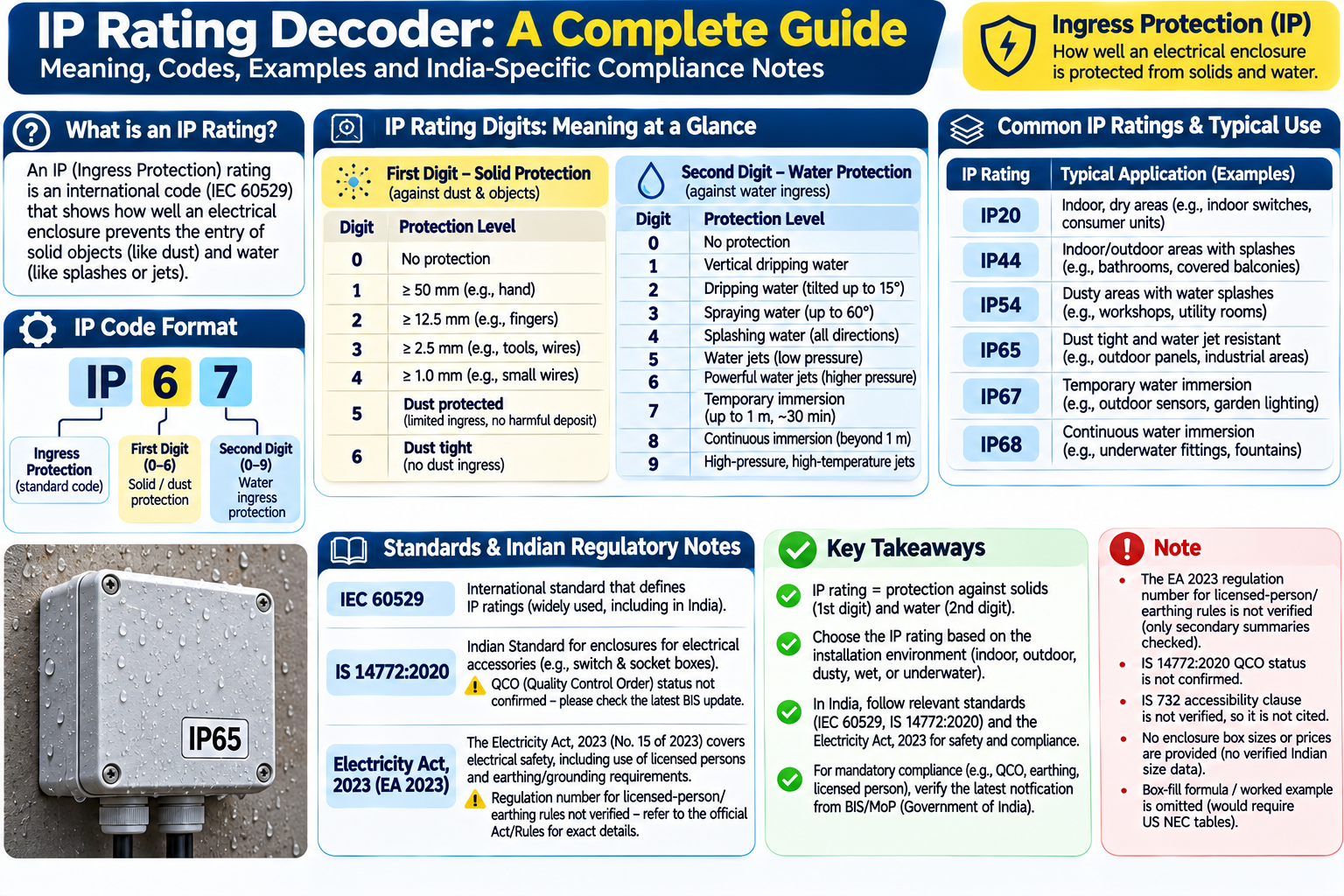
It needs a rating matched to the dust and water it faces. The first digit covers solids, the second water.
Common IP ratings decoded
Definitions per IEC 60529| Rating | Solids (1st digit) | Water (2nd digit) |
|---|---|---|
| IP44 | Objects over 1 mm | Splashing from any direction |
| IP55 | Dust-protected | Low-pressure water jets |
| IP65 Open terraces | Dust-tight | Low-pressure water jets |
| IP67 | Dust-tight | Temporary immersion to 1 m |
How Is Junction Box Electrical Termination Done Safely?
A licensed electrician installs it with the circuit switched off and tested dead. India's CEA safety regulations expect licensed, qualified people to do this work. Never touch live wiring.
- Isolate: MCB off, circuit tested dead.
- Mount: fix the box where the cover stays reachable.
- Enter: one conduit or cable per entry or gland.
- Terminate: use connectors or terminal blocks, never tape.
- Close: earth metal boxes, then fit and screw down the lid.
- BIS (ISI) mark with licence number
- Material and IP rating suited to the location
- Enough room for every joint
- Warm lid, burning smell or brown marks
- Cracked, brittle or thin-walled plastic
- Missing lid or open knockouts
- Damp around the box; fix the damp patch first
- Buried under plaster or a gypsum false ceiling with no access
Junction boxes and wiring essentials
Junction boxes, conduits, wires and MCBs, delivered across Bengaluru.
Which Junction Box Should You Buy?
Settle material, size and IP rating, then confirm them with your electrician.